Development
How to Renovate an Old Landed House Safely
-
Renee Ang
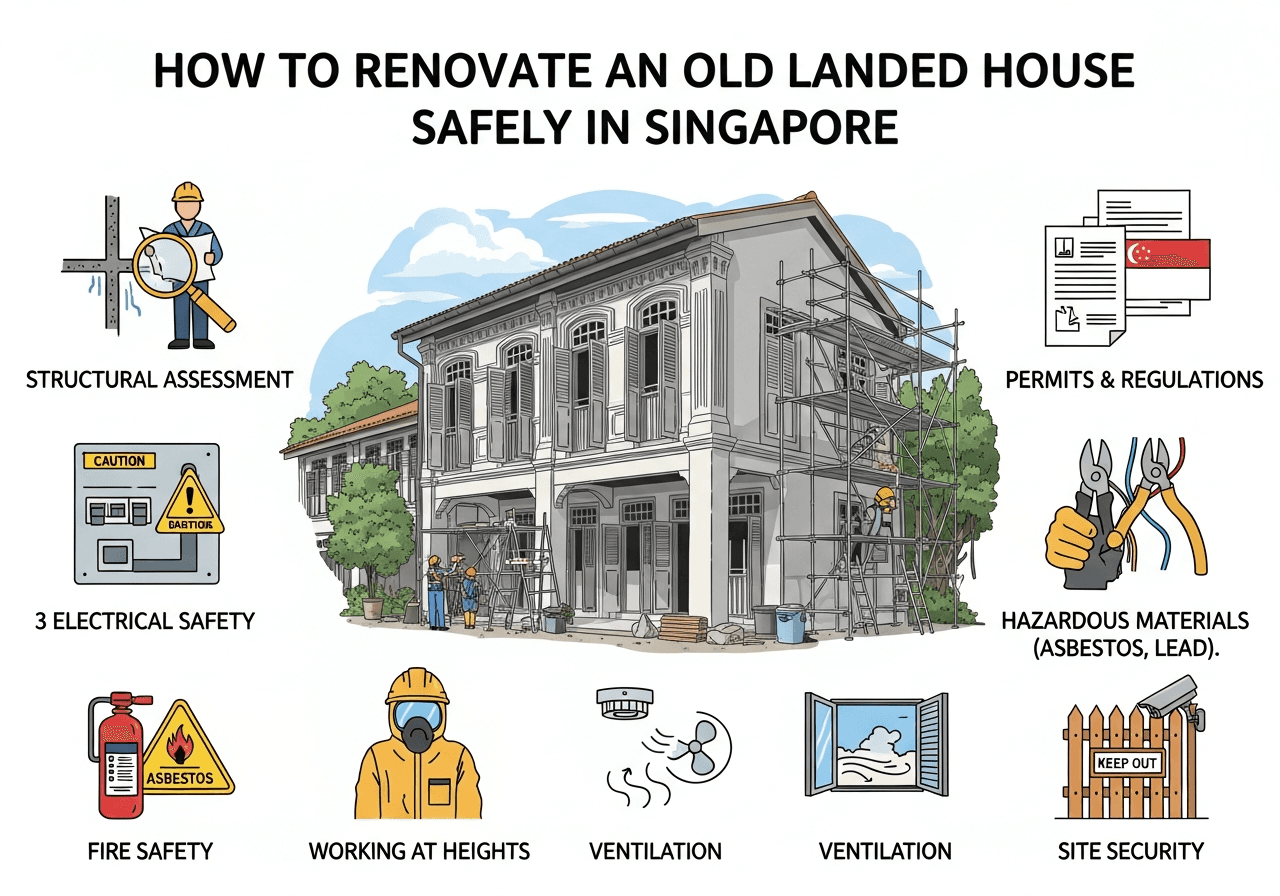
How to Renovate an Old Landed House Safely in Singapore
Renovating a mature landed home in Singapore is exciting, but also risky if not approached correctly. Many old terraces, semi-Ds, and bungalows built in the 1960s–1990s hide structural issues that only surface during renovation. Whether you’re updating a terrace in Opera Estate, modernising a semi-D in Serangoon Gardens, or improving a bungalow in Namly, safe renovation requires careful planning.
This guide explains how to renovate old landed houses safely, what to watch out for, and how to avoid costly mistakes that many new homeowners overlook.
1. Understand the Age & Construction Type of Your House
Older landed homes in Singapore fall into several construction categories, each with its own risks.
A. 1960s–1970s Homes
Found in areas such as:
Opera Estate
Frankel Estate
Serangoon Gardens (older pockets)
Jalan Chempaka / Upper Changi
Thomson Garden Estate
Eng Kong Park (older blocks)
Typical issues:
ageing RC beams
corroded rebar
thin concrete slabs
outdated plumbing
clay sewer pipes
low water pressure
termite exposure in roof
B. 1980s–1990s Homes
Common in:
Seletar Hills
Sunset Way
Pasir Ris landed cluster
Sembawang Springs Estate
Hougang Aster/Maple cluster
Lentor private enclave
Typical issues:
spalling concrete
substandard waterproofing
insufficient electrical load
single-phase power
weak roof tiles
C. Early 2000s Homes
Found in:
Springside
newer Lentor units
Westwood Park
Pasir Ris newer landed pockets
Jalan Dermawan / Victoryville
Typical issues:
minimal structural issues
wear-and-tear in plumbing
aged waterproofing
outdated carpentry
Understanding your house’s era helps determine the safety steps required.
2. Conduct a Full Structural Assessment Before Any Renovation
This is non-negotiable.
What a PE (Professional Engineer) checks:
condition of beams and columns
structural cracks
spalling concrete
termite damage
hollow-sounding slabs
load-bearing walls
stability of roof trusses
Why this matters:
In older estates like Frankel, Thomson Ridge, and Opera Estate, houses often have unseen structural deterioration that only experts can detect.
Dangerous signs:
exposed rusty rebar
sagging roof
cracks near beam-column joints
water damage on 2nd floor ceilings
bending window frames
Attempting renovations without structural checks can lead to collapse or serious injury.
3. Check for Asbestos (Certain Older Homes)
Homes built before the 1980s may contain asbestos in:
ceiling boards
corrugated roofing
old vinyl tiles
pipe insulation
High-risk areas:
older Serangoon Gardens houses
pre-1975 Opera Estate terraces
old Pasir Panjang houses
Thomson Garden Estate
Jalan Tua Kong older units
Removing asbestos requires a licensed specialist, not a normal contractor.
4. Inspect Roof Condition Thoroughly
The roof is one of the most problematic components in older houses.
Common issues:
termite-damaged timber rafters
water seepage through old tiles
rusted gutters
cracked flashing
Neighbourhood examples:
Siglap / Frankel → coastal humidity speeds deterioration
Pasir Panjang slopes → heavy rain impact
Sunset Way → older semi-Ds with long roof spans
Thomson Ridge → many still use 1970s roof structures
Safe renovation steps:
replace damaged rafters
install proper flashing
use anti-rust aluminium gutters
upgrade to concrete or metal roofing
5. Ensure Electrical System Meets Modern Safety Standards
Older landed houses often run on outdated or insufficient electrical loads.
Risks:
short circuits
overheating
fire hazards
flickering lights
burnt DB board smell
Areas with high wiring risks:
Opera Estate
Frankel Estate
older terraces in Serangoon North
Jalan Senang belt (deep older terraces)
Jalan Chempaka Kuning terraces
Sembawang Springs (early 90s wiring)
Safe renovation steps:
upgrade DB board
full rewiring
add sufficient power points
install RCBO/RCD for safety
plan lighting layout properly
Skipping electrical upgrades is one of the biggest safety mistakes.
6. Replace Old Plumbing & Sewer Lines
Older homes often use clay or steel pipes which corrode or leak.
Warning signs:
low water pressure
sewer smell from bathrooms
water backflow
constant choking
dampness on lower walls
Older estates with known plumbing issues:
Frankel
Thomson Garden
Pasir Ris older landed
Jalan Chempaka / Upper Changi
Opera Estate
Safe renovation steps:
replace to uPVC
re-route pipes for better flow
waterproof all wet areas
use proper floor gradients
Plumbing failures can damage your entire renovation.
7. Check for Termites (Especially Roof and Timber Structures)
Termite damage is extremely common in mature landed neighbourhoods.
High-risk areas:
Seletar Hills
Serangoon Gardens
Siglap / Frankel
Sunset Way
Upper Thomson
Pasir Panjang ridge houses
Inspect:
roof trusses
door frames
skirting
wooden flooring
backyard areas
A termite inspection is essential before renovation, not after.
8. Strengthen Foundations & Columns if Needed
Some older landed homes were not designed for heavy modern renovations.
Potential issues:
undersized columns
corroded reinforcement
low concrete strength
uneven settlement
Common neighbourhood examples:
Thomson Ridge (older foundations)
Braddell Heights
Siglap older terraces
Serangoon Gardens
Hillview slope houses
Safe remedy:
add structural steel beams
carbon fibre strengthening
column jacketing
underpinning for foundation
These must be endorsed by a PE and carried out by experienced contractors.
9. Understand URA/BCA Rules for Renovating Old Homes
Older homes often require additional compliance.
Key rules:
no illegal extension
setback requirements
envelope control limits
attic shape restrictions
staircase safety
fire safety paths
window size/height compliance
Sensitive zones:
Joo Chiat
Mountbatten
Pasir Panjang slopes
conservation-adjacent streets
Even internal works can require submissions if structural.
10. Ensure Proper Neighbour Protection Works (NPW)
Mandatory for terraces and many semi-Ds.
NPW includes:
monitoring cracks on neighbour’s walls
vibration meters
protective hoarding
site safety
waterproof barriers
Essential in:
Opera Estate
Serangoon North
Hougang landed pockets
Jalan Chempaka
Bedok South landed belt
This prevents disputes and protects your property legally.
11. Plan Drainage Improvements (Often the Hidden Danger)
Older landed estates have outdated drainage systems.
Flood-prone zones:
Pasir Ris
Sunset Way
Upper Bukit Timah
Pasir Panjang
Opera Estate (historical heavy rainfall incidents)
Safe steps:
improve internal drainage
re-slope outdoor areas
upgrade drain channels
waterproof all outdoor floors
Poor drainage can cause long-term structural damage.
12. Add Safety to Staircase & Wet Area Design
Many older houses have steep, narrow, or slippery staircases.
Renovation upgrades:
non-slip tiles
glass or steel railings
wider treads
better lighting
anti-slip edges
Wet areas:
toilets
kitchens
balconies
backyard wash areas
Safety-focused homes appeal strongly to multi-gen families.
13. Make Sure Your Contractor Has Landed Experience
Not all renovation contractors understand landed work.
Some specialise only in condos or HDB, which is very different.
Landed contractors must know:
structural safety
ground settlement
roof construction
drainage
boundary wall regulations
neighbour protection
scaffold safety
Especially for older districts like Frankel, Serangoon Gardens, Thomson Ridge, and Opera Estate.
14. Renovate in the Correct Sequence (Critical for Safety)
Proper order:
Structural strengthening
Plumbing & electrical replacement
Waterproofing
Tiling
Carpentry
Windows & doors
Painting
Final fixtures
Safety inspection
Doing things out of order leads to defects and unsafe conditions.
Useful Links
For structural renovation support:
🔗 A&A Contractor Singapore
If major issues are discovered and A&A becomes necessary:
🔗 A&A Guidelines for Singapore Landed Homes, What BCA Allows & Doesn’t Allow
For cost estimation before renovating an old house:
🔗 2026 Renovation Cost Guide for Singapore Landed & Commercial Spaces
If the house is too old for renovation and rebuild becomes more viable:
🔗 Landed House Rebuild Contractor Singapore
🔗 Tear Down & Rebuild Singapore
To prepare for renovation:
🔗 The Ultimate Checklist Before Starting Renovation Works in Singapore
To avoid unreliable service providers:
🔗 How to Avoid Common Renovation Scams in Singapore
Related