Development
Freehold vs 999-Year Landed Homes: How Tenure Changes Renovation Risk and Budget
-
Su Shiquan
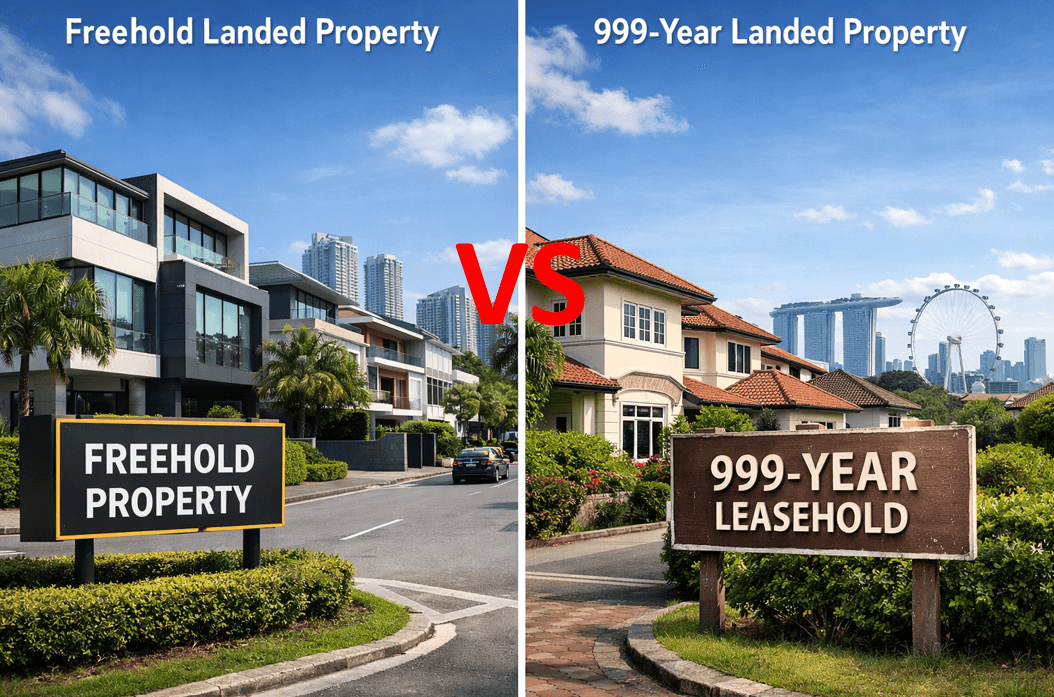
Freehold vs 999-Year Landed Homes: How Tenure Changes Renovation Risk and Budget
One of the most common assumptions landed homeowners make after purchase is this:
“It’s freehold / 999-year, so renovation should be straightforward.”
In reality, tenure has very little to do with renovation difficulty, and misunderstanding this often leads to budget shock, redesign, and delayed A&A approvals.
If you’re planning renovation or A&A works, this article explains how freehold vs 999-year tenure actually affects renovation risk, and what landed homeowners in Singapore should plan for, regardless of what’s written on the title deed.
Why buyers overestimate the importance of tenure
In the property market, tenure strongly affects:
resale value
long-term appreciation
buyer confidence
But from a landed house contractor’s perspective, tenure does not determine:
structural condition
waterproofing health
layout efficiency
compliance feasibility
renovation complexity
What tenure does influence is buyer psychology, not building reality.
What freehold and 999-year tenure actually mean for renovation
Let’s separate perception from reality.
Freehold / 999-year tenure affects:
how much buyers are willing to pay
how long owners intend to stay
appetite for long-term upgrades
Freehold / 999-year tenure does NOT guarantee:
better structure
newer construction
fewer defects
easier A&A approval
lower renovation cost
Older landed homes, even with excellent tenure, often carry hidden renovation risks.
Common renovation risks in freehold & 999-year landed homes
Across landed estates in District 19, District 15, and Bukit Timah, we frequently see the same issues in long-tenure properties:
1. Age-related structural limitations
Many freehold and 999-year landed homes:
were built decades ago
followed outdated construction practices
have structural layouts that don’t support modern open concepts
This affects:
wall removal feasibility
extension planning
attic or basement works
What You Must Know Before Tearing Down Your Landed Home
2. Waterproofing and drainage challenges
Tenure doesn’t protect against:
ageing roof membranes
poorly sloped drainage
past undocumented alterations
In fact, older tenure homes often have multiple layers of renovation history, making waterproofing failures harder to diagnose.
How to Renovate an Old Landed House Safely
3. Compliance constraints remain the same
A common misconception:
“Because it’s freehold, I can do more.”
In reality:
A&A regulations apply equally
boundary, height, and setback rules still apply
engineering and submission requirements don’t change
A&A Guidelines for Singapore Landed Homes, What BCA Allows & Doesn’t Allow
How tenure affects renovation decisions (not difficulty)
Where tenure does matter is decision-making behaviour.
Freehold / 999-year owners are more likely to:
plan for multi-generational use
invest in long-term structural solutions
consider staged A&A or rebuild
install future-proof elements (lift provision, accessibility)
This often leads to larger scope, not simpler renovation.
Freehold vs 999-year: renovation budgeting reality
Here’s how tenure indirectly influences budgets:
Factor | Freehold / 999-Year Homes |
Initial renovation ambition | Higher |
Willingness to future-proof | Higher |
Tolerance for longer timelines | Higher |
Risk of scope creep | Higher |
Need for early contractor input | Critical |
Ironically, owners who feel more “secure” about tenure often face greater renovation complexity due to ambition.
A&A vs rebuild: tenure is not the deciding factor
From a contractor’s viewpoint, the real decision triggers are:
structural condition
layout limitations
cost of rectifying defects
approval complexity
long-term family needs
Tenure alone should never determine whether you A&A or rebuild.
Rebuild vs A&A: Which Is Better for Your Landed Home?
Why tenure misconceptions lead to cost overruns
We often see this sequence:
Owner assumes tenure simplifies renovation
Design proceeds aggressively
Structural or compliance limits surface late
Redesign and variation orders follow
Budget and timeline inflate
This pattern is preventable, but only with early technical clarity.
How a landed house contractor mitigates tenure-related blind spots
An experienced landed house contractor looks beyond tenure and focuses on:
structural feasibility
regulatory boundaries
sequencing efficiency
long-term performance
This allows:
realistic budgeting
fewer surprises
better design decisions
smoother A&A approvals
How to Choose the Right Contractor for Your Landed Rebuild
What freehold & 999-year owners should do differently
If your home has strong tenure:
don’t assume simplicity
don’t skip technical checks
don’t rush into design-first decisions
don’t delay contractor involvement
Strong tenure deserves strong planning, not assumptions.
If you own a freehold or 999-year landed home and are planning renovation, A&A, or rebuild works, early engagement with a landed house contractor can help you align ambition with reality, before cost and timeline spiral.
Ember Earther Builders supports landed homeowners across District 19, District 15, and Bukit Timah with clarity-driven planning and execution.
FAQ
Does freehold tenure reduce renovation risk?
No. Renovation risk depends on building condition, layout, and compliance, not tenure.
Are A&A rules different for freehold homes?
No. Regulations apply regardless of tenure.
Is rebuild more common for freehold properties?
Not always. Many freehold homes still benefit more from well-planned A&A.
Related