Development
The Ultimate Checklist Before Starting Renovation Works in Singapore
-
Renee Ang
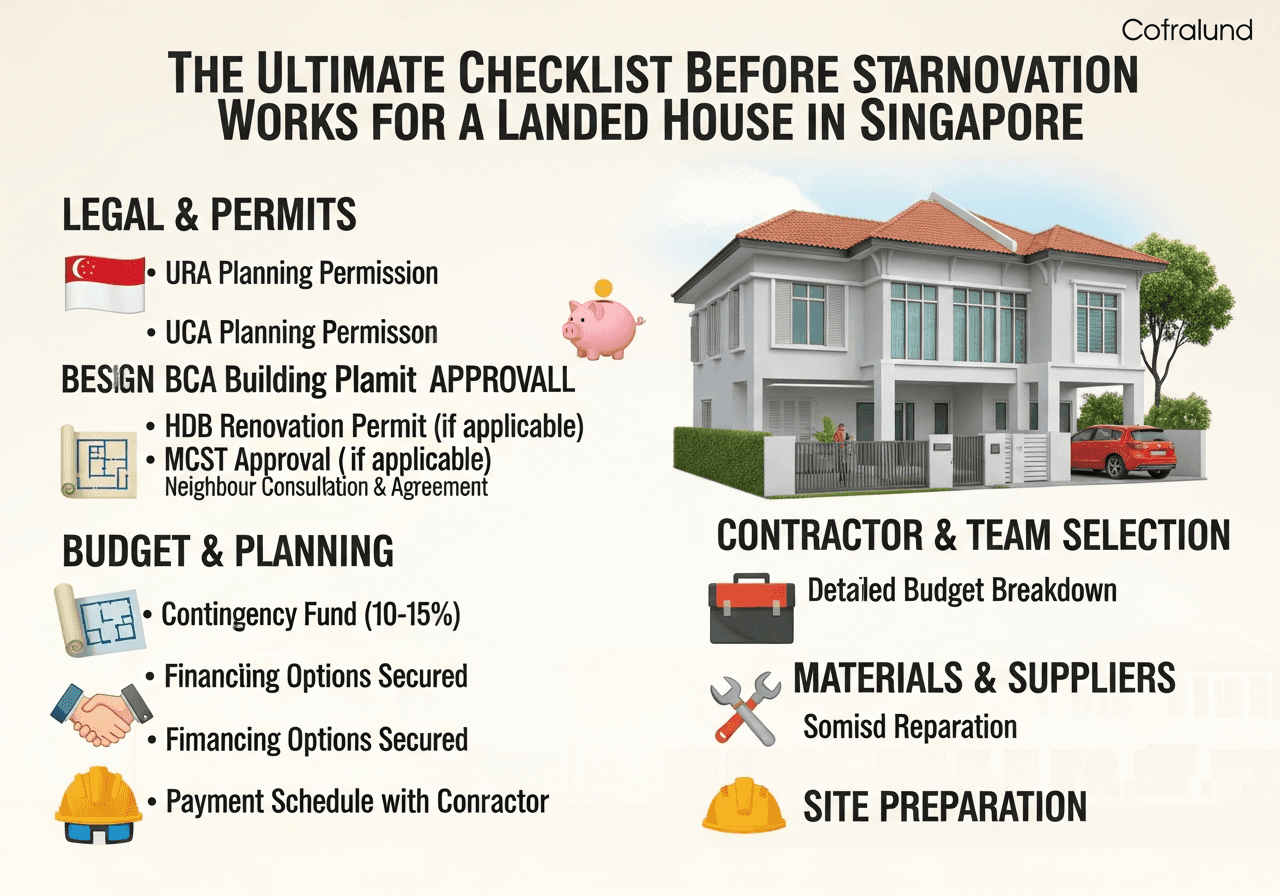
The Ultimate Checklist Before Starting Renovation Works in Singapore
Renovating a home, especially a landed house in Singapore, requires detailed planning long before the contractor starts work.
Whether you're renovating a terrace in Serangoon North, updating a semi-D in Sunset Way, refreshing a townhouse in Upper Bukit Timah, or remodelling a shophouse unit in Joo Chiat, the steps you take before renovation determine whether your project goes smoothly.
This is the most complete pre-renovation checklist for Singapore homeowners, updated for 2026.
Use it to avoid delays, protect your budget, and ensure that your renovation meets regulatory and safety standards.
1. Assess the Current Condition of Your Home (Non-Negotiable)
Before planning any design, understand what you’re working with.
✔ Check the structure
Especially for older homes in:
Opera Estate
Frankel Estate
Serangoon Gardens
Kembangan / Jalan Senang
Thomson Garden Estate
Hillview Garden Estate
Seletar Hills
Look for:
cracks
water damage
termite signs
sagging floors
roof leakage
structural corrosion
✔ Check plumbing
Older districts may have clay pipes and iron fittings.
✔ Check electrical
If the DB board is older than 20 years → upgrade.
Why this matters:
Your renovation plan must match the house’s physical reality.
2. Finalise Your Renovation Goals
Many homeowners skip this and end up changing their minds repeatedly, causing delays and extra cost.
Ask yourself:
Is this upgrade meant for your own stay or resale?
Do you need more storage?
Is the kitchen too small?
Are you adding rooms?
Are elderly or children living here?
Do you intend to create rental rooms?
Example by neighbourhood types:
Serangoon Gardens: Families often need larger kitchens and dining areas.
Pasir Ris landed: Larger land means more potential for outdoor enhancements.
Jalan Chempaka / Upper Changi: Mature homes often need M&E upgrades.
Springleaf / Lentor: Newer homes may only require interior refresh.
Clarity prevents scope creep later.
3. Set a Realistic Renovation Budget
Include a 10–20% contingency for landed homes.
Typical 2026 budgets:
Light reno: $20,000–$60,000
Moderate reno: $80,000–$200,000
Major reno: $150,000–$350,000
Budget drains (often forgotten):
rewiring
re-plumbing
waterproofing
drainage fixes
window replacement
roof repairs
neighbour protection works
debris removal
Homes in older areas like Frankel, Thomson Ridge, Braddell Heights, and Pasir Panjang typically exceed initial budgets due to hidden issues.
4. Prepare Documentation & Approvals
Some renovations require submission to authorities.
✔ URA (Architectural approval)
Needed for:
façade change
windows repositioning
roofing modifications
extensions
✔ BCA (Structural approval)
Needed for:
wall removal
openings in slabs
stairs modification
mezzanine
heavy structural carpentry
✔ PUB (Drainage & sewer)
Needed for:
bathroom additions
kitchen relocation
extension that affects drainage
✔ SCDF
Needed for:
commercial units
certain staircase adjustments
This is especially important in heritage or sensitive zones like:
Joo Chiat
Mountbatten
Hillview slope houses
Pasir Panjang ridge
Failing to secure approval can cause stop-work orders and fines.
5. Choose the Right Contractor (Landed Specialists Only)
Contractors who mostly handle condos/HDB units may not have the expertise for landed homes.
Landed specialists understand:
structural behaviour
drainage systems
roof waterproofing
external façade work
scaffold requirements
neighbour protection regulations
Areas where landed expertise is crucial:
Kembangan older terraces
Thomson Ridge
Frankel Estate
Serangoon Gardens
Upper Bukit Timah
Hillview slopes
Do not choose based on price alone. Experience matters.
6. Review Your Floor Plan & Space Planning Feasibility
Before any hacking or carpentry is proposed, ensure that structural walls and load-bearing beams are identified.
Common space reconfigurations:
enlarging living area
opening kitchen
removing old storerooms
shifting bedroom doors
widening master bedroom
Feasibility concerns:
older terraces (Opera Estate, Jalan Senang) may have thin slab beams
Serangoon Gardens semi-Ds have irregular columns
Pasir Panjang slope houses may require careful load distribution
Get a PE’s input early for any major changes.
7. Decide Whether Renovation or A&A Is More Suitable
Some “renovations” end up exceeding renovation limits and fall into A&A territory.
Renovation is enough if:
no structural changes
no new floor area
only interior finishes and layout rework
A&A is required if:
adding bathrooms
adding extensions
building mezzanine
adding attic space
changing roofline
enlarging rooms structurally
Neighbourhoods where houses often crossover into A&A:
Frankel
Serangoon Gardens
Thomson Ridge
Seletar Hills
Sunset Way
Jalan Chempaka Kuning
If unsure → check the internal links below.
8. Prepare a Detailed Renovation Scope List
A vague scope = endless disputes.
Must include:
tiling
carpentry
plumbing
electrical
windows & doors
roofing
waterproofing
painting
ceiling works
lighting layout
AC system
façade repainting
For commercial jobs:
fire-rated partitions
exhaust systems
grease trap requirements
mall compliance rules
The clearer your scope, the more accurate your quotation.
9. Get Transparent, Itemised Quotations
Avoid lump-sum quotations unless you fully trust the contractor.
Compare quotes with attention to:
electrical point counts
thickness of tiles
carpentry materials
waterproofing system brand
window system type
door hardware quality
reinforcement for feature walls
Red flags:
extremely low pricing
vague scope lines
material “TBC”
unrealistic timelines
demand for high deposits
These are common in renovation scams.
10. Check Material Durability & Suitability for Singapore Weather
Singapore’s climate is hot, humid, and rainy, especially in coastal or open areas.
Good material choices:
aluminium frames (not mild steel)
stone or porcelain tiles
quartz countertops
solid surfaces for heavy kitchen use
anti-fungal paints
water-resistant laminates
Estate-specific considerations:
Siglap, Pasir Ris: corrosion risk → choose anti-rust materials
Sunset Way: strong sun exposure → UV-resistant laminates
Pasir Panjang slopes: heavy rain → better waterproofing
Thomson Ridge: old soil settlement → flexible flooring choices
11. Finalise Your Renovation Timeline
Typical timeline (non-A&A):
Light reno: 4–6 weeks
Moderate reno: 8–12 weeks
Major reno: 12–20+ weeks
Delays commonly occur due to:
material lead time
wet weather
uncovering hidden structural issues
tile supply shortages
electrical rewiring complexity
Neighbourhood-related delays:
Joo Chiat (narrow roads) → slower material transport
Thomson Ridge (older walls) → extended hacking time
Sunset Way (large houses) → more detailing work
12. Prepare Neighbours (Important in Landed Estates)
Noise and dust during renovation can be intense.
Inform neighbours early, especially in:
terrace estates (Opera Estate, Serangoon North)
narrow-road clusters (Jalan Senang, Joo Chiat)
slope houses (Pasir Panjang)
A small gesture prevents unnecessary complaints.
13. Plan Your Temporary Living Arrangements
Depending on the size of renovation, you may need to move out.
Move out if:
bathrooms are being hacked
flooring is being redone
roof repair is extensive
the house is dusty and unsafe for children/elderly
House types where staying is typically hard:
long terraces (Telok Kurau)
older houses with major rewiring
semi-Ds undergoing kitchen overhaul
Pasir Panjang houses with structural waterproofing
Leaving the house accelerates renovation progress.
14. Confirm Warranty, Defects Policy & Post-Reno Support
A responsible contractor will provide warranties for:
waterproofing
plumbing
electrical
carpentry
roofing
Old houses often reveal defects weeks after handover, so post-renovation support is crucial.
Useful Links
If your renovation may cross into structural works:
🔗 A&A Contractor Singapore
If you want to check the legal rules before renovating:
🔗 A&A Guidelines for Singapore Landed Homes, What BCA Allows & Doesn’t Allow
To estimate the cost of your renovation:
🔗 2026 Renovation Cost Guide for Singapore Landed & Commercial Spaces
If the house is too old or inefficient for renovation alone:
🔗 Landed House Rebuild Contractor Singapore
🔗 Tear Down & Rebuild Singapore
To avoid unreliable service providers:
🔗 How to Avoid Common Renovation Scams in Singapore
To choose the best materials:
🔗 How to Choose the Right Materials for Singapore’s Weather
Related