Development
A&A Guidelines for Singapore Landed Homes, What BCA Allows & Doesn’t Allow
-
Renee Ang
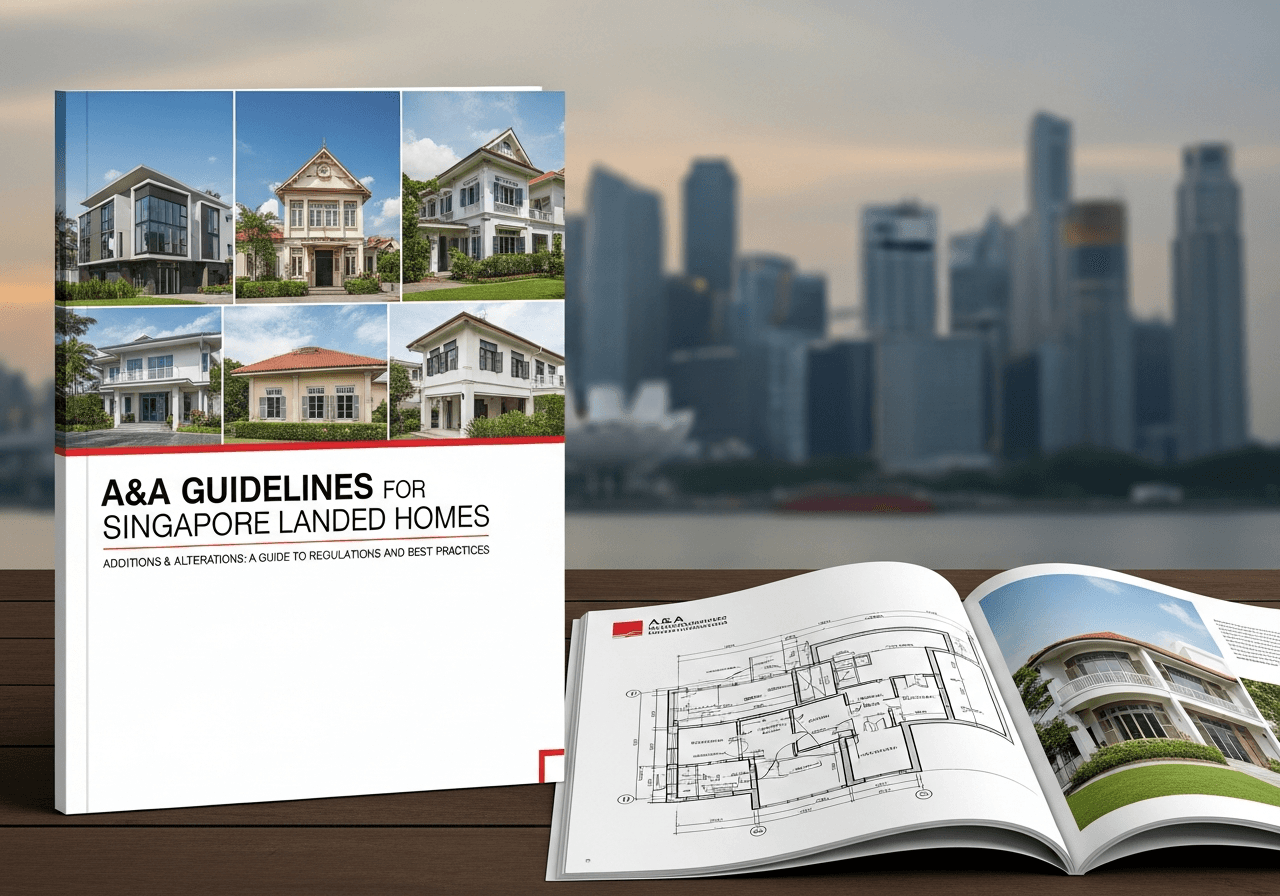
A&A Guidelines for Singapore Landed Homes, What BCA Allows & Doesn’t Allow
If you're planning to upgrade an older landed house in Singapore, whether it’s a terrace in Opera Estate, a semi-D in Serangoon Gardens, or a bungalow in Upper Bukit Timah, you’ve probably wondered:
What exactly does BCA allow under A&A? And where is the line between A&A and a full rebuild?
This is a crucial question because doing the wrong kind of works can trigger:
stop-work orders
costly redesign
reclassification into a “rebuild”
delays in approval
additional structural requirements
This guide explains A&A rules in plain English, with real examples across Singapore’s landed neighbourhoods, and practical implications for homeowners.
1. What Is Considered A&A (Addition & Alteration)?
A&A includes works that modify, improve, or extend an existing house without demolishing the main structural framework.
A&A Examples:
Rear extension (small to moderate)
Enlarging kitchen or dining area
Adding a bathroom
Changing internal walls
Installing skylights
Adding mezzanine level (within structural limits)
Partial roof upgrades or reconfiguration
Façade modernisation
Upgrading M&E (mechanical & electrical systems)
Enlarging window openings
Improving ventilation and natural light
A&A is suitable for older houses with strong bones, such as those in:
Serangoon Gardens
Thomson Ridge
Binjai Park
Seletar Hills
Sunset Way
Kew Drive / Bedok South
2. What A&A DOES NOT Allow
This is the part homeowners often misunderstand, and the part where BCA approval is strict.
Here’s what is NOT allowed under A&A:
1. You Cannot Demolish the Primary Structural Framework
This includes:
main beams
main columns
majority of the roof structure
primary floor slabs
If too many structural components are removed, BCA automatically classifies the project as a rebuild.
Example:
Older terraces in Frankel Estate where the owner wants to:
remove front slab
remove rear slab
change entire staircase
shift main beams
→ This exceeds A&A and becomes a rebuild.
2. You Cannot Add Full Additional Storeys
A 2-storey house CANNOT become a 3-storey house under A&A.
However, it may be possible to add:
an attic (within envelope control)
a mezzanine (if within structural load limits)
Terraces in:
Telok Kurau
Opera Estate
Jalan Daud
often add attic floors, but it must comply with URA’s envelope control rules.
3. You Cannot Change the Entire Building Envelope
Major roof redesigns or full elevation changes may trigger “rebuild” classification.
Small adjustments are allowed.
Full profile redesign = not allowed.
4. You Cannot Remove Staircases Without Structural Approval
Staircase removal affects structural load distribution.
Older semi-Ds in Serangoon Gardens or Sunset Way often have staircases in awkward spots.
Shifting them → A&A is possible ONLY if beams remain untouched.
5. You Cannot Exceed Setbacks or Height Limits
Singapore’s landed homes must follow strict URA guidelines:
Setback examples:
Rear: 2m (typically)
Side: varies for terrace, semi-D, corner terrace
Front: determined by existing line
Height control:
2-storey landed zone
2.5-storey mixed landed zone
3-storey landed zone
Houses in East Coast (Lucky Heights, Frankel, Opera Estate) often sit in 3-storey zones → more attic flexibility.
Houses in Bukit Timah sometimes fall in 2-storey zones → A&A limits are stricter.
6. You Cannot Build Beyond Allowable GFA (Under A&A)
Large extensions that dramatically increase GFA (Gross Floor Area) cannot be classified as A&A, even if structural elements remain.
3. What BCA Allows Under A&A (2026 Updated Rules)
Below is the most important section: what you can legally do.
1. Internal Configuration Changes
This includes:
removing non-structural walls
reconfiguring rooms
enlarging living or dining space
converting storage to helper’s room
Common in:
Thomson Garden Estate
Seletar Hills
Serangoon North
These estates often have older segmented layouts that modern families prefer to open up.
2. Small to Medium Extensions
Most common form of A&A.
Rear extensions:
Popular in:
Telok Kurau
Opera Estate
Pasir Panjang
Kembangan
Serangoon Gardens
Rear extensions may include:
kitchen enlargement
utility area
new bathroom
dining room extension
Side extensions (for corner terraces and semi-Ds):
Allowed as long as:
setback is maintained
drainage is managed
structural loading is calculated
Typical in:
Binjai Park
Sunset Way
Lentor private estate
3. Façade Improvements
A&A allows:
new windows
new cladding
new front elevation
new gate/fencing
aluminium screen features
balcony design updates
Façade modernisation is very common in areas undergoing revitalisation, such as:
Marine Parade (TEL effect)
Upper Thomson (TEL effect)
Lentor (new private enclave)
Beauty World (IT Hub redevelopment)
4. Interior Reworks (Mezzanines, Bathrooms, Etc.)
As long as the structural capacity is confirmed by a PE.
Allowed:
mezzanine addition (if floor loading is within limit)
converting void to usable space
adding bathrooms
adding skylights
enlarging staircases
replacing internal finishes
Homes in Serangoon Gardens, Holland Grove, and Frankel Estate frequently add mezzanines to improve space.
5. Roofing Works (Partial)
BCA allows:
re-roofing
upgrading waterproofing
replacing tiles
modifying pitch (slightly)
adding skylights
Full roof reconstruction may trigger rebuild classification.
6. M&E Upgrades
A&A allows replacement of:
wiring
plumbing
aircon trunking
exhaust ducts
distribution board
lighting circuits
Older houses in Thomson, Bedok South, and Serangoon North often require full M&E upgrades.
4. A&A Regulatory Submission Requirements
Even though A&A is not a rebuild, it still requires authority submissions.
Here’s what typically needs to be submitted:
A. BCA Submissions
Required for:
structural works
extension works
façade changes
roof modifications
new openings in external walls
PE (Professional Engineer) endorsement is mandatory.
B. URA Submissions
Required if the A&A affects:
envelope profile
GFA
roof form
external elevation
attic/mezzanine addition
C. PUB Submissions
Required for:
drainage
sewer connection changes
bathroom addition
This often applies in older estates like Telok Kurau, Seletar Hills, and Siglap.
D. SCDF Submissions
Required when significant internal reconfiguration affects fire escape paths.
5. Special Zones with Stricter A&A Rules
A&A guidelines differ across neighbourhoods depending on planning zones.
1. Conservation-Influenced Areas (Façade Restrictions)
E.g.,
Joo Chiat
Mountbatten
Emerald Hill (though mostly conserved)
Façade alterations must respect area character.
2. Low-Rise Exclusive Zones
E.g.,
Caldecott Hill
Brizay Park
King Albert Park
Windsor Park
Height limits are tighter → attic and mezzanine works require careful checks.
3. MRT Growth Corridors (Higher Demand for A&A)
Areas near upcoming or recently opened MRT stations often see more A&A works:
TEL:
Siglap
Marine Parade
Bayshore (future)
Upper Thomson
Lentor
Springleaf
CRL:
Hougang
Serangoon North
Because homeowners want to upgrade homes before resale as these districts appreciate.
6. When A&A Is Not Recommended
Even if allowed, A&A is not always the best option.
Avoid A&A when:
structure is severely compromised
termites have damaged beams
house sits on unstable soil (Pasir Panjang slopes, parts of Bukit Timah)
drainage issues require foundation rework
layout is too inefficient to salvage
you intend to maximise GFA to the full envelope
In these cases, rebuilding is more cost-efficient long-term.
7. How to Avoid Compliance Problems (Critical Tips)
✔ Do not start demolition before BCA approval
Even partial demolition may be considered unauthorised.
✔ Avoid removing slabs without structural engineer approval
Many owners unknowingly cross into “rebuild” territory.
✔ Ensure neighbour protection works are performed
Terraces in Opera Estate, Telok Kurau, Serangoon Gardens require careful NPW.
✔ Plan M&E early
Older houses often require full rewiring, leaving this late causes delays.
✔ Document every structural decision
For smoother submission and resale documentation.
Useful Links
For homeowners ready to engage experts who ensure full A&A compliance:
🔗 A&A Contractor Singapore
If you're unsure whether your intended changes exceed A&A limits:
🔗 Landed House Rebuild Contractor Singapore
🔗 Tear Down & Rebuild Singapore
To understand the cost implications of different types of A&A:
🔗 How Much Does A&A Work Cost in Singapore?
To explore how far you can extend legally under A&A:
🔗 How to Expand Your Landed Home Legally Using A&A Works
To compare renovation, A&A, and rebuild options:
🔗 Renovation, A&A, or Rebuild, Which Should You Choose?
Related