Development
What You Must Know Before Tearing Down Your Landed Home
-
Renee Ang
What You Must Know Before Tearing Down Your Landed Home in Singapore
Tearing down a landed house in Singapore, whether it’s an aging terrace in Jalan Tua Kong, a semi-D in Sunset Way, or a bungalow in Caldecott Hill, is a big decision. A demolition marks the start of a major transformation, but it also comes with regulations, costs, neighbour considerations, and structural planning requirements that many homeowners overlook.
Whether you’re a condo upgrader stepping into landed living for the first time, or a long-time homeowner finally rebuilding an old family home, this guide explains everything you must know before demolition begins.
1. When Should You Tear Down Instead of Renovating or Doing A&A?
A teardown is usually the correct choice if the house is:
A. Structurally Old (30–50 years)
Homes in these neighbourhoods often fall into this category:
Opera Estate / Frankel Estate
Serangoon Gardens (older terraces)
Telok Kurau deep plots
Thomson Ridge / Upper Thomson
Kew Drive / Bedok South
Lentor / Yio Chu Kang older terraces
Seletar Hills Estate
Older homes usually suffer from:
outdated electrical lines
corroded plumbing
low ceilings
poor ventilation
spalling concrete
ageing roof structures
B. Poor Layout That Cannot Be Improved Without Structural Changes
Common in long, narrow terraces (e.g., Telok Kurau, Opera Estate, Serangoon North), where:
the middle of the house is dark
ventilation is poor
kitchen space is small
staircase blocks airflow
A&A won’t fix these fundamental issues, tearing down is better long-term.
C. You Want to Maximise GFA (Gross Floor Area)
If your plot is located in a:
3-storey landed zone (East Coast, Upper Serangoon)
2.5-storey mixed landed zone (Thomson, Serangoon Gardens)
Master Plan growth zone (Lentor, Marine Parade, Siglap, Springleaf)
a rebuild lets you:
add attic
add larger floors
create more bedrooms
optimise the roof space
incorporate future lift shaft
D. You Plan to Sell Within the Next Few Years
Rebuilt homes achieve significantly higher resale value, especially when located near MRT lines such as:
TEL (Lentor, Upper Thomson, Marine Parade, Siglap, Bayshore Future)
NSL/CCL interchanges (Bishan Park landed belt)
Beauty World Integrated Transport Hub area
Pasir Panjang (Greater Southern Waterfront planning zone)
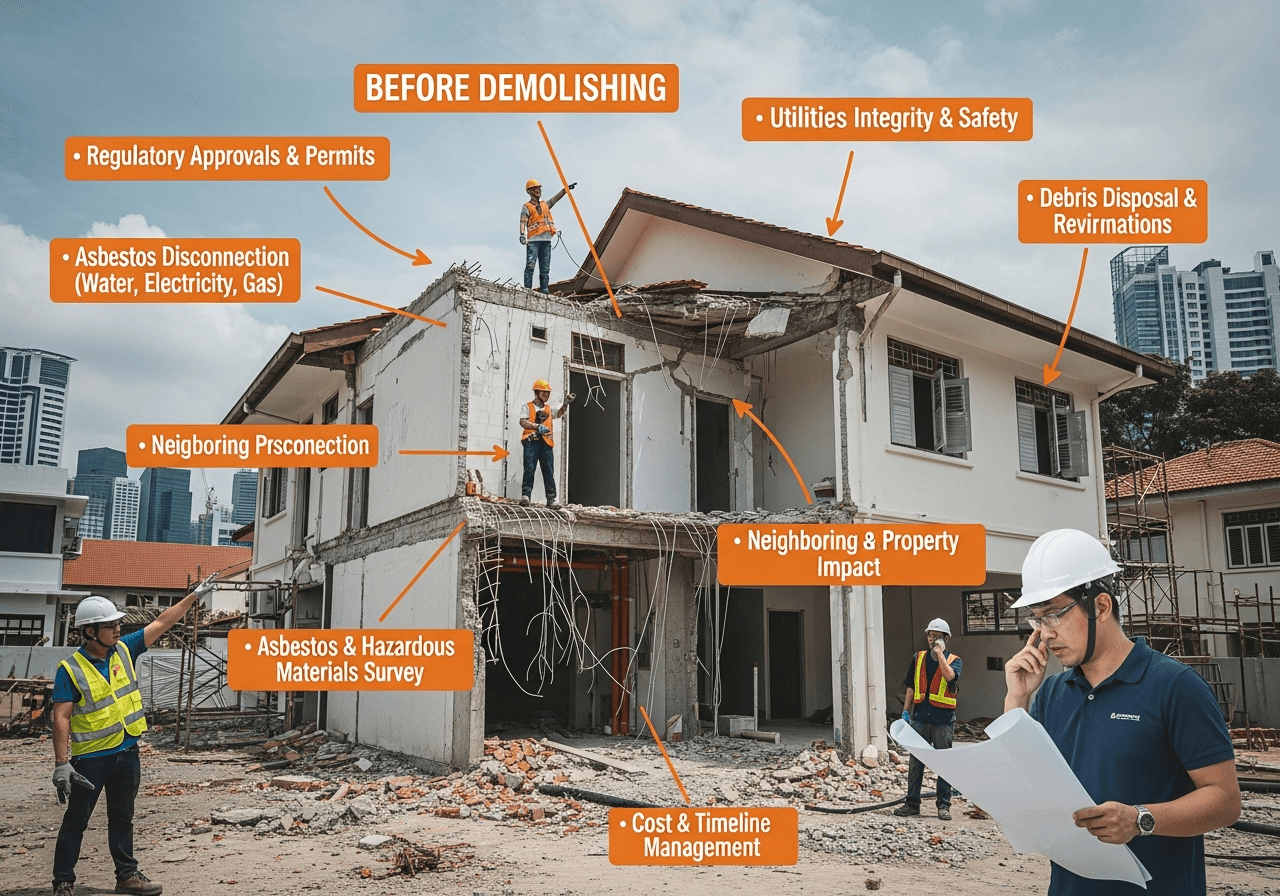
2. Step-by-Step Process Before Tearing Down Your Landed Home
Demolition is not just about knocking walls down. Singapore’s regulations ensure safety, neighbour protection, and proper sequencing.
Here’s what must happen first.
Step 1: Engage an Architect + Structural Engineer
Before anything can be demolished, the following must be in place:
Architectural concept plan
Structural assessment
Approval strategy for URA + BCA
Submissions timeline
Neighbour protection planning
This team determines:
what can be demolished
what must be retained
what design heights you can achieve
how much GFA is legally allowed
whether attic or basement is possible
Neighbours in areas like Braddell Heights, Binjai Park, Sunset Way, or Pasir Panjang slopes often require tailored protection measures depending on soil condition.
Step 2: Apply for BCA Demolition Permit
BCA evaluates:
safety risks
structural method statement
debris disposal plan
neighbour protection plan
Professional Engineer endorsements
Demolition permits are a must even if the house “looks old and easy to tear down.”
Step 3: Neighbour Protection Works (NPW)
Homes sharing party walls (common in Serangoon Gardens, Opera Estate, Kovan, Hillview Gardens) or houses with minimal setback will require NPW.
NPW may include:
pre-condition surveys
structural monitoring
vibration control
temporary supports
insurance coverage
NPW is one of the most frequently overlooked costs.
Step 4: Utilities Termination & Temporary Site Setup
Before demolition starts:
SP electricity termination
PUB water termination/relocation
temporary power setup
site hoarding
safety signage
portable toilets
worker rest area
In dense estates like Joo Chiat, Kembangan, and Thomson, narrow access roads also require traffic coordination for trucks and debris bins.
Step 5: Actual Demolition Begins
Once everything above is approved, demolition proceeds in stages:
Remove roof tiles / roofing
Strip interior finishes
Remove windows & fittings
Take down non-load-bearing walls
Take down structural elements
Demolish foundation
Clear debris
Level the land
Prepare for piling or foundation works
Homes on slopes (e.g., Pasir Panjang, Hillview, Bukit Timah) need careful sequencing to avoid soil collapse.
3. Hidden Costs Homeowners Often Miss Before Demolition
A. Sewer diversion
Common in:
Siglap
Frankel
Bedok South
Seletar Hills
Pasir Ris landed pockets
B. Tree protection under NParks rules
Especially for bungalows with mature trees in:
Binjai Park
Watten Estate
Sunset Way
Holland Grove
C. Scaffolding & access difficulties
Tight roads in Joo Chiat, Opera Estate, Serangoon Gardens can increase machinery and debris removal cost.
D. Soil condition issues
Older neighbourhoods often require soil strengthening before new foundation work begins.
4. Key URA & BCA Guidelines You Must Understand Before Demolition
A. Envelope Control
Your new house must fit into URA’s 2-storey / 2.5-storey / 3-storey envelope.
Homes in Upper Serangoon, Kew Drive, Lucky Heights often fall into 3-storey zones and benefit most from full rebuilds.
B. Attic Restrictions
Height and profile rules determine whether your attic is:
usable
partially usable
considered mezzanine
C. Setback Requirements
Minimum front, rear, and side setbacks determine how much GFA you can achieve.
Corner terraces, especially in Serangoon Gardens, Seletar Hills, Thomson Ridge, often enjoy bigger GFA potential due to side setbacks.
D. Conservation / Special Planning Areas
Certain streets in Katong, Joo Chiat, and Mount Pleasant areas require additional guidelines.
5. Planning Your New House Before Demolition
A. Maximise GFA While Staying Liveable
Rebuilt houses commonly include:
attic
roof terrace
large kitchen
ensuite bedrooms
helper’s room
provision for lift
full-height windows
Districts where maximising GFA significantly improves value:
Marine Parade (TEL)
Springleaf / Lentor
Siglap
Serangoon Gardens
Bishan Park landed belt
Pasir Panjang (GSW uplift)
B. Improve Ventilation & Natural Light
Especially important for:
long terraces in Opera Estate
deep plots in Telok Kurau
narrow terraces in Upper Serangoon
older houses in Thomson Ridge
Strategies include:
light wells
open staircase
skylights
courtyard design
side windows for corner terraces
C. Plan M&E Properly (A Major Weakness in Old Homes)
Most older landed homes have:
outdated wiring
insufficient circuits
poor ventilation
rusted pipes
A rebuild lets you design modern systems from scratch.
6. Risks & Mistakes to Avoid Before Demolition
Mistake 1: Starting Demolition Before Full Approval
This can cause delays, fines, or stop-work orders.
Mistake 2: Assuming Old Neighbouring Houses Are Stable
Some neighbouring walls may be fragile, especially in older estates like Siglap, Joo Chiat, Opera Estate.
NPW is essential.
Mistake 3: Not Budgeting for Structural Surprises
Buried pipes, old foundations, and weak soil increase cost.
Mistake 4: Choosing an Inexperienced Contractor
Landed demolition is completely different from condo renovation.
The contractor must be familiar with:
demolition sequencing
PE methods
safety management
access planning
debris removal logistics
NPW compliance
Look for contractors who work regularly in Singapore landed estates.
Useful Links
For homeowners ready to engage a full rebuild team after demolition:
🔗 Landed House Rebuild Contractor Singapore
If you are deciding between A&A and full rebuilding before demolition:
🔗 A&A Contractor Singapore
To understand what happens after teardown:
🔗 Tear Down & Rebuild Singapore
For cost planning before demolition:
🔗 Cost to Rebuild a Landed House in Singapore (2026 Guide)
For common issues that may arise after demolition starts:
🔗 Hidden Costs Homeowners Overlook When Rebuilding
To ensure your new home design is planned correctly after teardown:
🔗 How to Maximise GFA When Rebuilding a Landed Home in Singapore
Related