Development
Terrace House A&A in Singapore: What Recent Buyer Trends Say About Extensions and Layout Changes
-
Su Shiquan
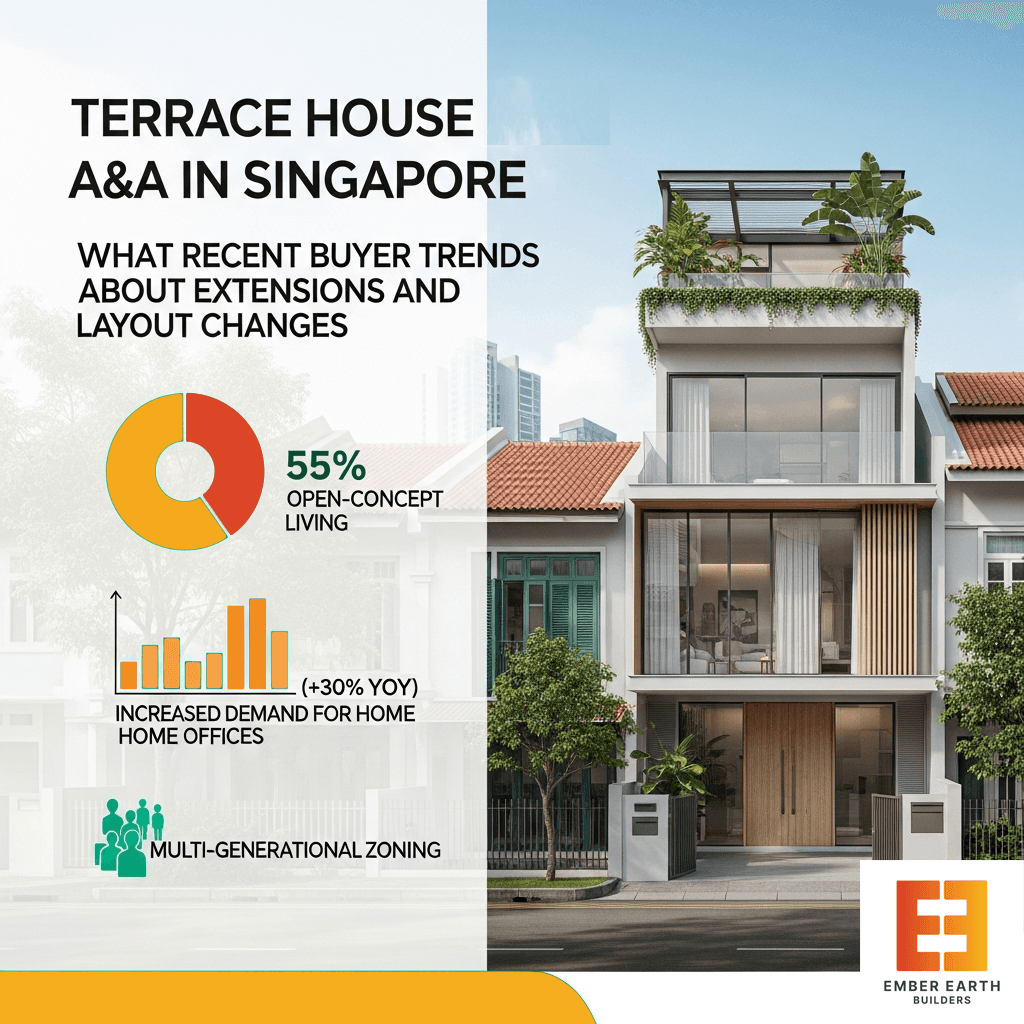
Terrace House A&A in Singapore: What Recent Buyer Trends Say About Extensions & Layout Changes
Terrace houses form the backbone of Singapore’s landed housing market.
They are:
the most transacted landed property type
common in District 19, District 15, and city-fringe estates
usually the first landed step for HDB and condo upgraders
But from a landed house contractor’s perspective, terrace houses are also where renovation expectations most often clash with physical and regulatory limits.
This article explains:
what recent terrace house transactions reveal
why A&A is the dominant renovation path
which extensions and layout changes actually work
where terrace owners get into trouble
Why terrace houses behave differently from other landed types
Terrace houses share several defining constraints:
party walls on both sides
fixed frontage width
limited lateral expansion
older structural layouts
These constraints mean:
Terrace renovations succeed or fail based on planning quality, not budget size.
This is why terrace houses show very consistent A&A behaviour across districts.
Recent terrace house transactions & renovation direction (expanded)
Area / Estate | Landed Type | Land Area (sqft) | Price Range | PSF | Tenure | Typical Post-Purchase Renovation Path |
Serangoon Garden | Terrace | ~1,840 | ~$5.6M–$5.9M | ~$3,000 | 999-yr | A&A with rear extension |
Kovan / Upper Serangoon | Terrace | ~2,150 | ~$4.6M–$5.0M | ~$2,100 | Freehold | Staged A&A |
District 15 (East Coast) | Terrace | ~1,600–1,900 | ~$5.3M–$5.8M | ~$3,200 | Freehold | A&A + internal reconfiguration |
Hougang / AMK fringe | Terrace | ~2,300 | ~$3.6M–$3.9M | ~$1,650 | 999-yr | Renovation → selective A&A |
Bukit Timah fringe | Terrace | ~2,400 | ~$8.0M–$8.8M | ~$3,500 | Freehold | A&A-first, rebuild deferred |
What this table tells a contractor
Terrace houses rarely justify rebuild immediately
A&A is the most cost-effective path across all price bands
Higher PSF → more aggressive layout change expectations
Budget pressure → staged A&A is common
This is why terrace houses dominate A&A enquiries in Singapore.
The most common A&A scopes for terrace houses
1. Rear extensions (the highest-value move)
Rear extensions are popular because:
they increase usable space
they improve kitchen / dining layouts
they avoid party wall complications
Best practice:
partial extension
planned together with drainage and waterproofing
How to Expand Your Landed Home Legally Using A&A Works
2. Internal layout reconfiguration
Most older terrace houses suffer from:
narrow kitchens
dark internal spaces
inefficient stair placement
High-value A&A changes include:
opening up living / dining zones
reworking stair alignment (where feasible)
improving vertical flow
What Exactly Is A&A Work? A Simple Guide for Singapore Homeowners
Attic / roof optimisation (where permitted)
In certain terraces:
attic conversion
roof restructuring
can unlock value, but this often:
triggers A&A
requires early structural checks
Where terrace house renovations commonly go wrong
❌ Assuming terrace = “simple renovation”
Party walls and shared boundaries mean:
structural assumptions are dangerous
noise, vibration, and sequencing matter
❌ Discovering A&A triggers too late
Common triggers include:
wall removals
slab modifications
extensions
Late discovery leads to:
approval delays
redesign
cost escalation
A&A vs Renovation: Key Differences in Singapore Regulations
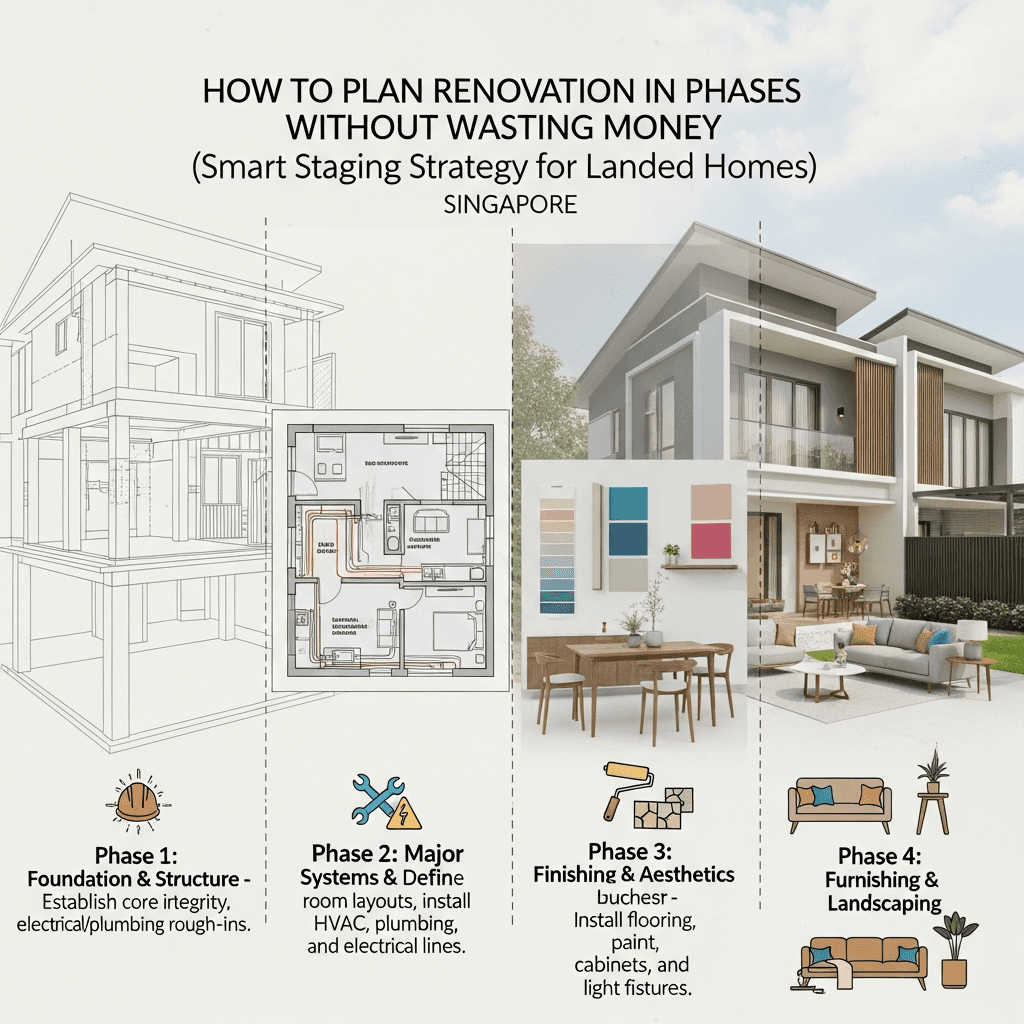
❌ Poor staging decisions
Staged works without a masterplan often cause:
duplicated hacking
repeated waterproofing
higher long-term cost
How to Plan Renovation in Phases Without Wasting Money
A&A vs rebuild for terrace houses (honest view)
Option | When It Makes Sense | Risk Level |
Renovation only | Minimal layout change | Low |
A&A | Space + layout upgrade | Medium |
Rebuild | Severe structural limits | High (rarely justified) |
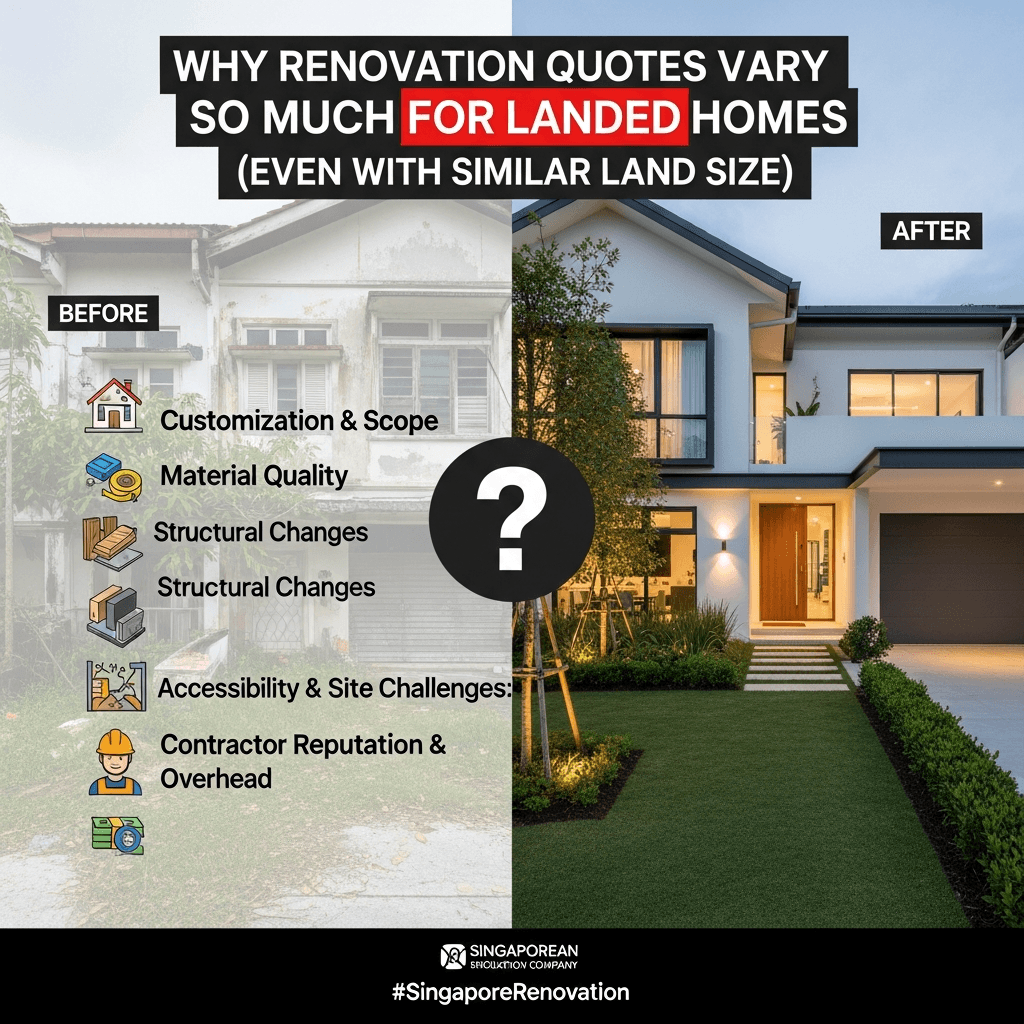
Rebuild vs A&A: Which Is Better for Your Landed Home?
Why terrace houses need early contractor involvement
Terrace A&A works require:
tight sequencing
accurate structural judgement
careful waterproofing continuity
neighbour-sensitive planning
Early engagement with a landed house contractor helps:
identify real A&A scope
avoid over-engineering
control approvals and cost
This is why terrace owners searching “landed house contractor Singapore” are usually facing A&A decisions, not cosmetic renovation.
How Ember Earther Builders approaches terrace house projects
Ember focuses on:
structure-first feasibility
A&A trigger identification
cost-effective extension strategy
long-term performance, not short-term aesthetics
This allows terrace owners to:
upgrade space intelligently
avoid rebuild-level risk
maximise value within constraints
If you own a terrace house in Singapore and are planning renovation or A&A works, early consultation with a landed house contractor can help you avoid layout and approval mistakes before construction begins.
Ember Earther Builders supports terrace house owners across Singapore with clarity-first A&A planning.
FAQ
Is A&A common for terrace houses in Singapore?
Yes. Most meaningful terrace upgrades require A&A planning.
Should I rebuild a terrace house?
Only when structure or layout is beyond reasonable correction.
Can terrace houses be renovated in stages?
Yes, but only with a proper master plan to avoid rework.
Related