Development
Price Paid vs Renovation Reality: What Singapore Landed Buyers Commonly Underestimate (2026)
-
Su Shiquan
Price Paid vs Renovation Reality: What Singapore Landed Buyers Commonly Underestimate
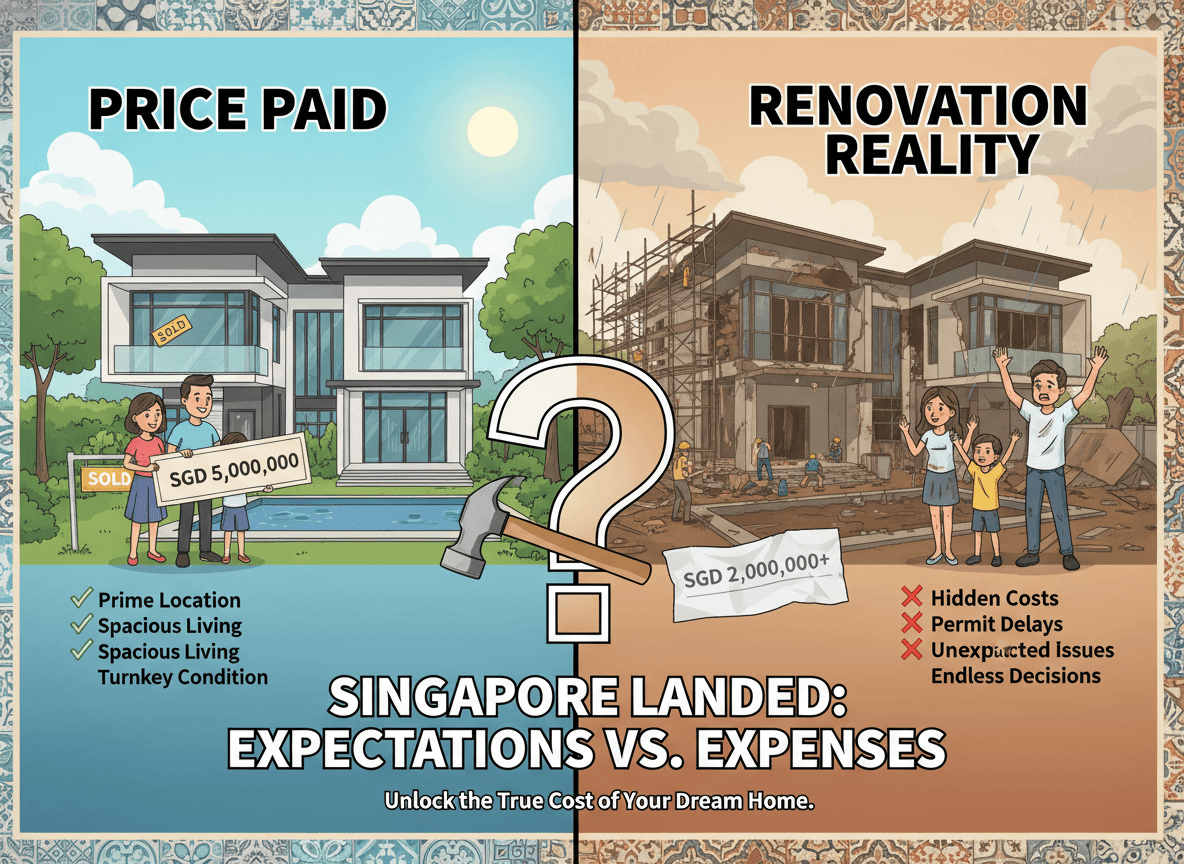
Buying a landed home in Singapore is a major milestone, but for many homeowners, the real surprise begins after the purchase, when renovation planning starts.
Across multiple landed districts such as District 19 (Serangoon / Kovan), District 15 (East Coast), and District 10 (Bukit Timah), we consistently see the same pattern:
The price paid for the house shapes renovation expectations, but rarely reflects renovation reality.
Using insights drawn from recent URA landed transaction data and on-the-ground contractor experience, this article explains why renovation budgets often exceed expectations, and how different price bands lead to very different renovation outcomes.
Why “price paid” distorts renovation expectations
Many homeowners subconsciously link purchase price to renovation difficulty:
“We paid $5M, the house should be in good shape.”
“It’s freehold / 999-year, structurally it must be fine.”
“The previous owner lived here for years, so issues should be minimal.”
In reality, landed transaction prices reflect land value and location, not:
waterproofing condition
structural configuration suitability
M&E ageing
regulatory constraints for expansion
This mismatch is where renovation budgets start to drift.
Snapshot: Recent landed transaction price bands (selected districts)
Below is a simplified illustration based on recent URA landed resale records across OCR and RCR landed estates.
Price Band (SGD) | Common Districts | Typical Property Types | Buyer Profile |
$3.0M – $3.9M | D19, D20, D28 | Terrace / older Semi-D | First-time landed buyers |
$4.0M – $5.5M | D15, fringe D10 | Terrace / Semi-D | Family upgraders |
$6.0M and above | Core D10, select enclaves | Semi-D / Detached | Long-term planners |
Important: Homes within the same price band can still require vastly different renovation scopes depending on age, layout, and compliance constraints.
What buyers in each price band typically underestimate
$3.0M – $3.9M buyers: “We’ll just renovate the inside”
This group is common in District 19 (Serangoon, Kovan, Rosyth) and similar OCR landed pockets.
Common assumptions:
Minimal structural work needed
Budget mainly for finishes and layout
A&A can be “figured out later”
What actually happens:
waterproofing issues surface after hacking
floor levels and drainage need correction
older M&E routing conflicts with new layouts
approvals delay interior sequencing
These owners often end up doing partial A&A unintentionally, increasing cost and timeline.
Relevant internal links:
How to Renovate an Old Landed House Safely
What to Prepare Before Starting A&A Works on Your Landed Home
$4.0M – $5.5M buyers: “We want it done properly, but not rebuild”
This band is common in District 15 (East Coast) and city-fringe landed zones.
Common assumptions:
A&A will solve most spatial issues
Budget buffer is sufficient
Structural risks are manageable
Where costs usually blow out:
underestimating structural strengthening
scope creep from “since we’re hacking already…”
façade + envelope upgrades triggered by regulations
drainage and boundary compliance adjustments
Many owners in this band start with A&A but approach rebuild-level complexity without rebuild-level planning.
Relevant links:
$6.0M+ buyers: “Let’s future-proof everything”
This group dominates parts of District 10 (Bukit Timah) and prime enclaves.
Common assumptions:
Rebuild guarantees better value
Higher budget eliminates risk
Design freedom is near-total
Reality check:
regulatory constraints still apply
rebuild timelines are long and approval-heavy
poor early planning leads to expensive redesign
cost escalation often comes from coordination gaps, not materials
Ironically, higher budgets don’t remove risk, they amplify mistakes.
Relevant internal links:
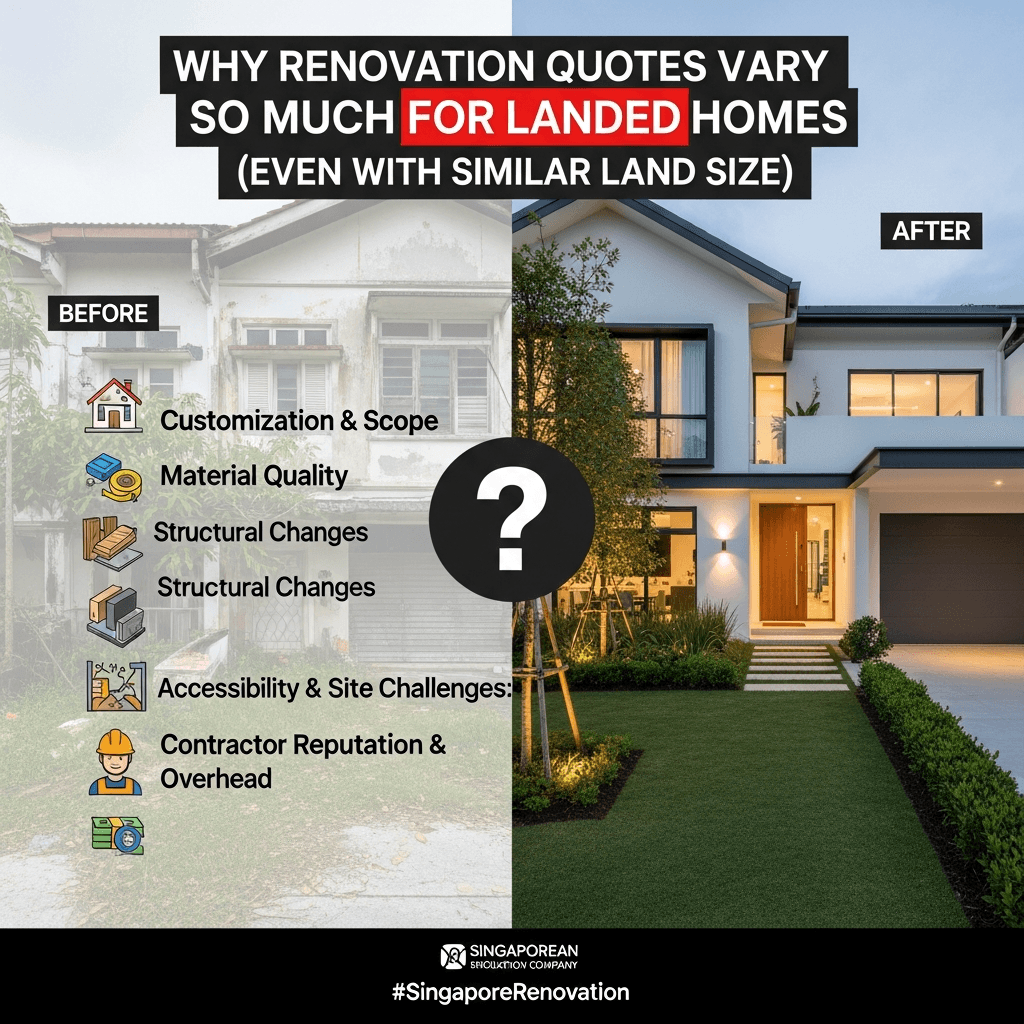
Why two homes on the same street renovate differently
URA transaction data often shows:
similar land sizes
similar purchase prices
similar tenure
Yet renovation outcomes vary dramatically.
Why?
Because renovation success depends on:
internal structural layout
slab and beam positions
previous undocumented works
drainage and service routing
how early a builder is involved
This is why price alone is a poor predictor of renovation complexity.
The contractor insight most buyers only learn too late
From a builder’s perspective, the biggest cost driver isn’t:
tile choice
sanitary ware brand
façade style
It’s late discovery:
discovering compliance issues after design
discovering structural limits after hacking
discovering approval constraints after submission
That’s why early technical planning matters more than optimistic budgeting.
How to align renovation planning with the price you paid
Before finalising renovation scope, new landed homeowners should:
Separate land value from building condition
Assess structure, drainage, and M&E early
Decide A&A vs rebuild before design finalisation
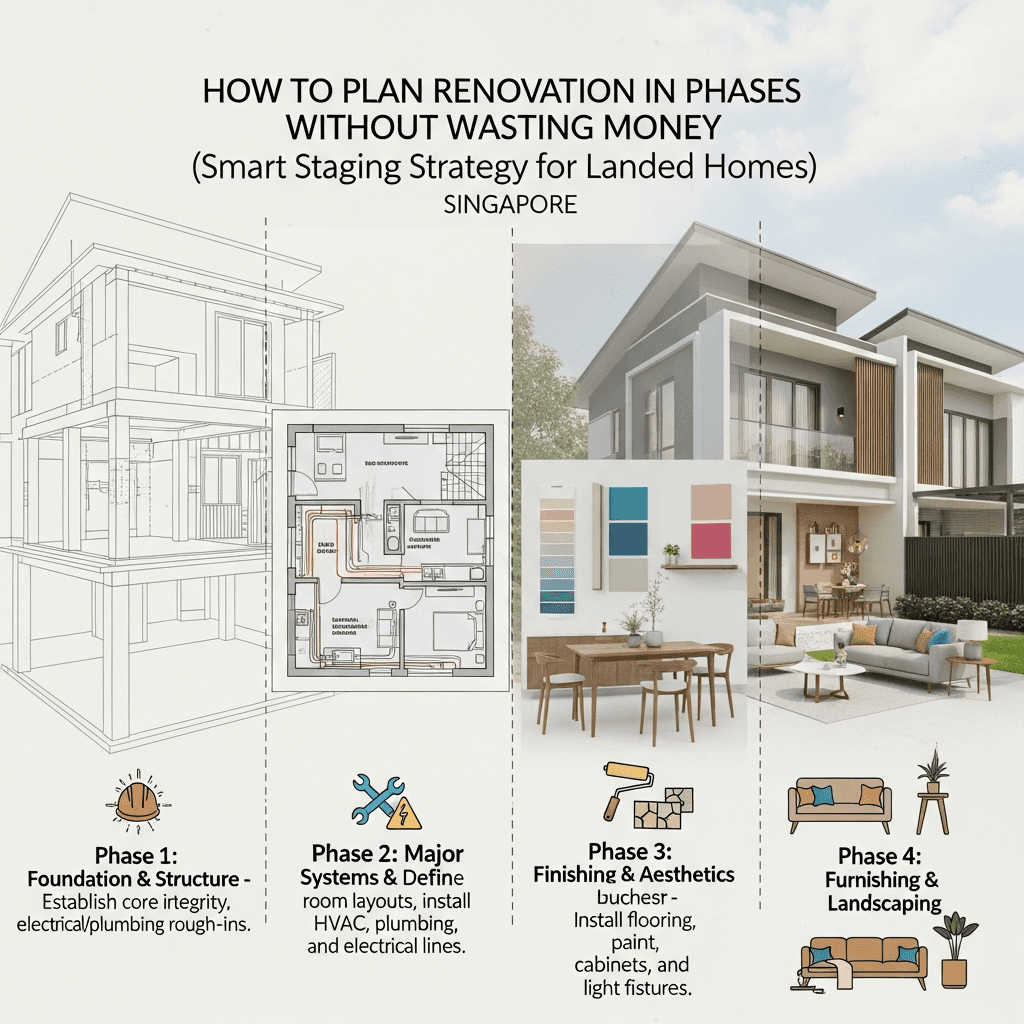
Plan renovation in stages only if sequencing is intentional
Engage a builder early, not after drawings are “fixed”
Why Ember Earther Builders frames renovation with transaction context
Most contractor sites talk about:
materials
packages
workmanship photos
At Ember Earther Builders, we believe landed homeowners benefit more from:
understanding why renovation outcomes differ
planning scope based on real market behaviour
avoiding cost escalation through early clarity
Transaction data helps ground expectations, but experience prevents mistakes.
If you’ve recently bought a landed home and are unsure whether your renovation expectations match reality, an early discussion can save months of redesign and unexpected cost.
Ember Earther Builders works with homeowners across District 19, District 15, and District 10 to plan renovation, A&A, or rebuild works with clarity, before irreversible decisions are made.
FAQ
Does a higher purchase price mean lower renovation risk?
No. Purchase price reflects land value and location, not structural condition or compliance complexity.
Is A&A always cheaper than rebuild?
Not always. Poorly planned A&A can approach rebuild cost without rebuild benefits.
When should I involve a builder after purchase?
Before finalising design and submission, early involvement reduces redesign and variation costs.
Related