Development
Bought a Landed Home in 2025–2026? The First 90 Days Checklist Before Any A&A Starts
-
Su Shiquan
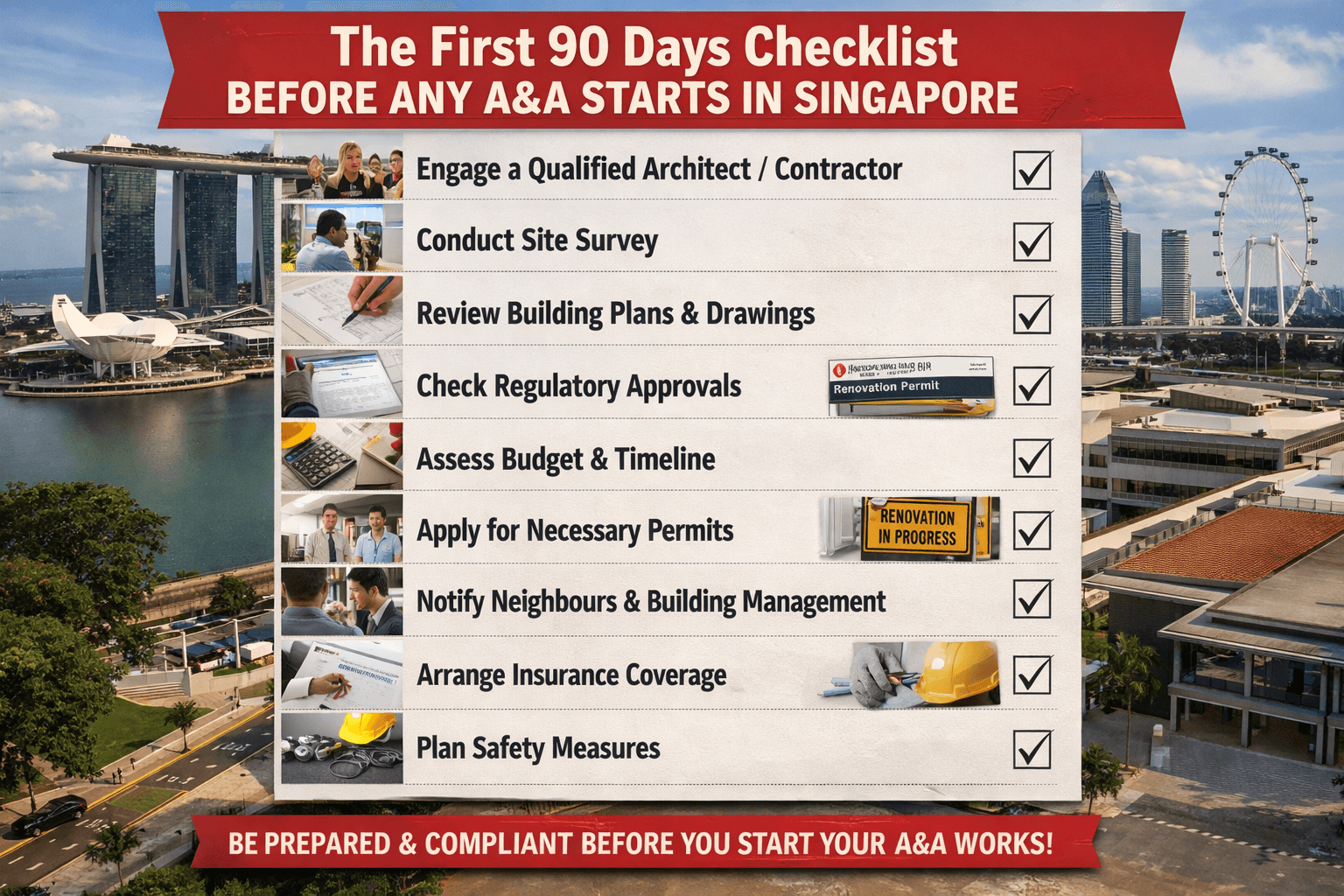
Bought a Landed Home in 2025–2026? The First 90 Days Checklist Before Any A&A Starts
For many homeowners, buying a landed house feels like the finish line.
In reality, it’s the starting point of a much more complex journey — especially if renovation or A&A works are involved.
Across landed estates in District 19 (Serangoon / Kovan), District 15 (East Coast), and Bukit Timah, we regularly meet owners who wish they had done things differently in the first 90 days after purchase.
This checklist exists to help you avoid that regret — and to plan renovation or A&A works the right way, before irreversible decisions are made.
Why the first 90 days matter more than most owners realise
The first three months after buying a landed home determine:
whether renovation is smooth or stressful
whether costs stay controlled or escalate
whether A&A approvals are straightforward or delayed
whether your contractor relationship starts with clarity or confusion
Many issues blamed on “bad luck” are actually early planning gaps.
Phase 1 (Days 1–30): Understand what you actually bought
1. Separate land value from building condition
Transaction prices reflect location and land scarcity, not building health.
Within the first month:
visually inspect roof, bathrooms, and external walls
note signs of past water ingress
identify previous renovation layers (older homes often have multiple)
How to Renovate an Old Landed House Safely
2. Identify whether you are leaning toward renovation, A&A, or rebuild
At this stage, you don’t need a final decision — but you do need a direction.
Ask yourself:
Are we trying to improve layout only?
Do we need more floor area?
Are there structural limitations we already see?
Renovation, A&A, or Rebuild – Which Should You Choose?
Phase 2 (Days 31–60): Get technical clarity before design
This is where many homeowners make their most expensive mistake — jumping straight into design.
3. Understand A&A and rebuild regulatory boundaries early
Not all changes are equal under regulations.
Before any design is “locked”:
understand what qualifies as A&A
know what requires engineering input
know what may trigger rebuild-level approval
Links:
What Exactly Is A&A Work? A Simple Guide for Singapore Homeowners
A&A Guidelines for Singapore Landed Homes, What BCA Allows & Doesn’t Allow
4. Assess structure, drainage, and waterproofing early
These elements determine feasibility — not finishes.
Key checks:
slab conditions
drainage gradients
boundary conditions
roof structure and waterproofing history
Skipping this step often leads to:
redesign
delayed submissions
variation orders after work starts
5. Engage a landed house contractor before finalising design
This is where outcomes diverge sharply.
Homeowners who engage a landed house contractor early typically experience:
fewer design revisions
smoother A&A approval pathways
clearer cost alignment
more realistic timelines
Phase 3 (Days 61–90): Decide scope, sequence, and timing
By this stage, you should be moving from thinking to structuring.
6. Decide between full works or staged renovation — intentionally
Staged renovation can work — but only if planned deliberately.
Unplanned staging leads to:
duplicated costs
repeated hacking
inconsistent waterproofing
inefficient sequencing
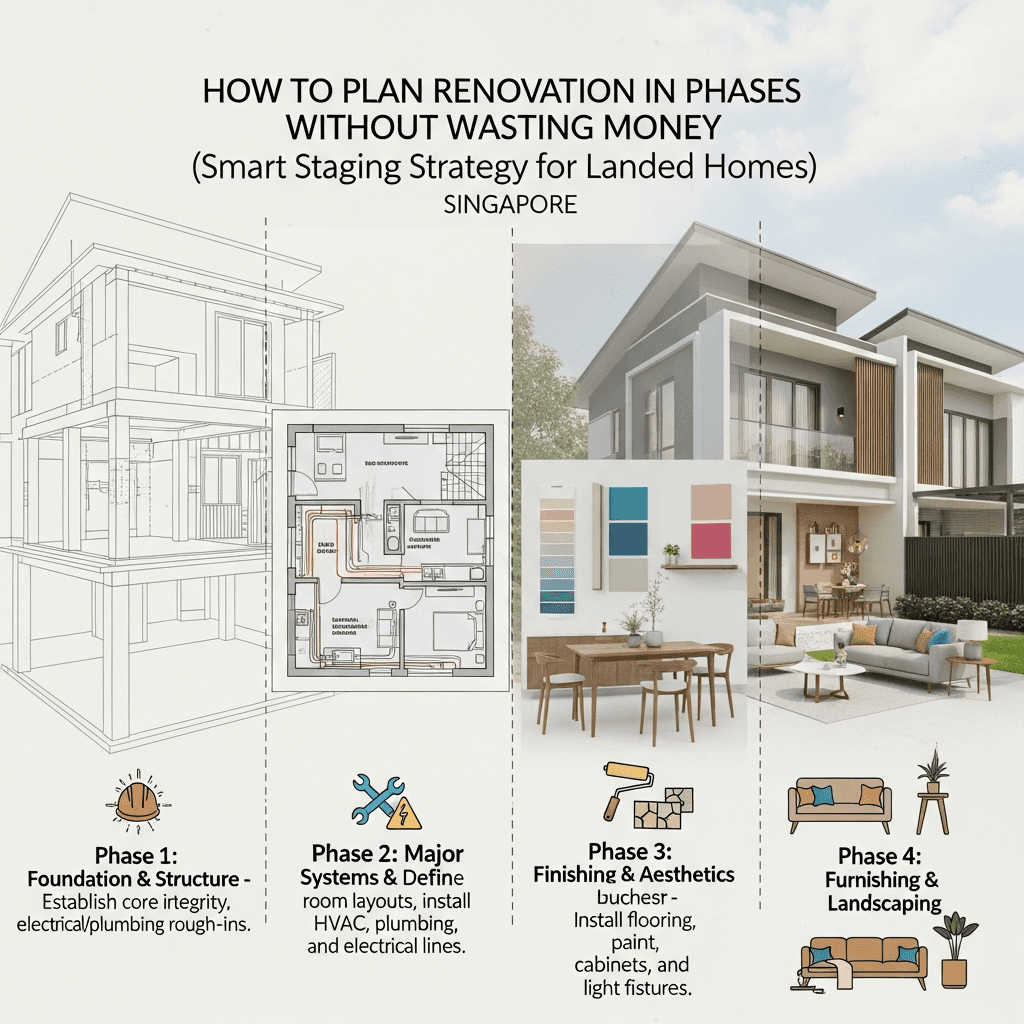
How to Plan Renovation in Phases Without Wasting Money (future article)
7. Align budget with realistic scope (not optimistic assumptions)
Many owners realise too late that:
renovation scope expanded
compliance requirements added cost
timelines lengthened
If you’ve already read:
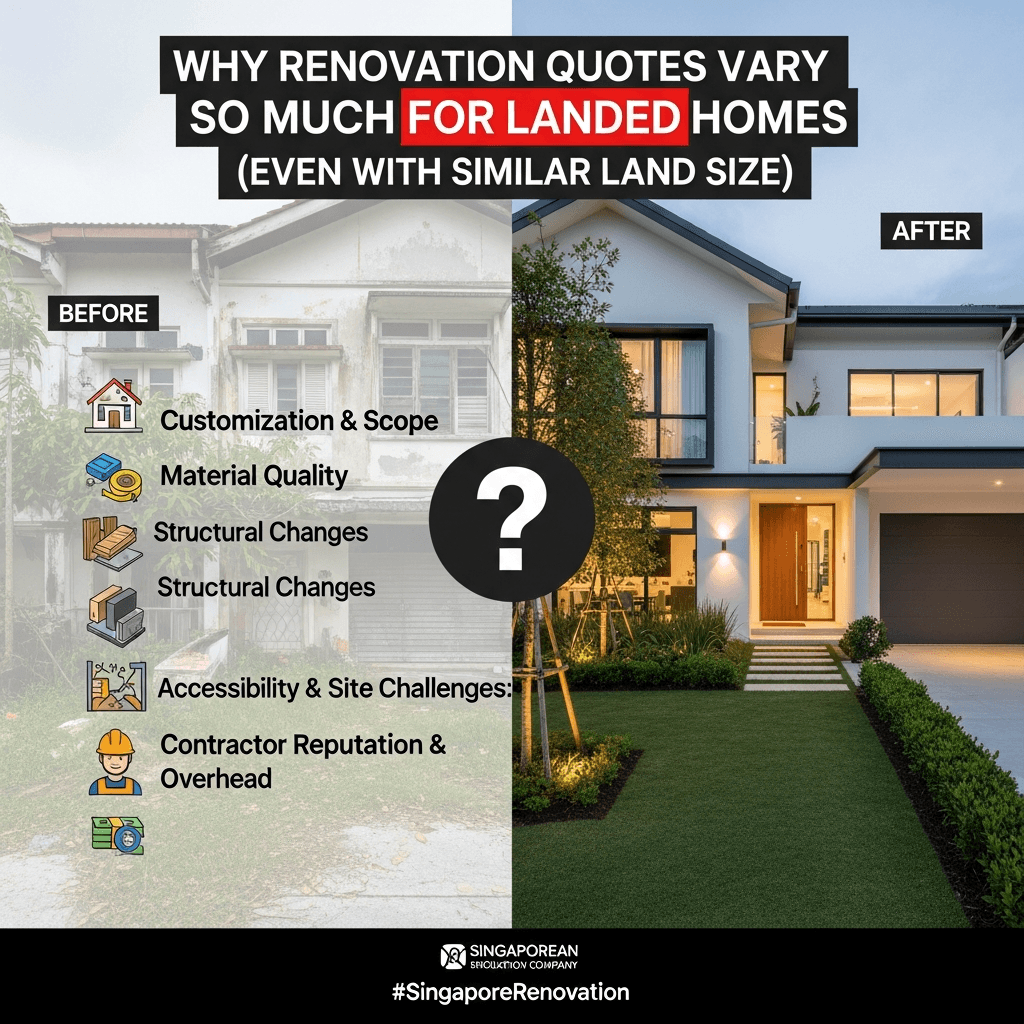
Price Paid vs Renovation Reality: What Singapore Landed Buyers Commonly Underestimate
this is where that insight becomes actionable.
8. Understand realistic timelines before committing
Before signing anything, ensure you understand:
approval lead times
construction sequencing
contractor availability
How Long Does a Landed House Rebuild Take? Timeline Breakdown
Common mistakes homeowners make in the first 90 days
From a contractor’s perspective, these come up repeatedly:
locking design before technical input
underestimating regulatory impact
assuming all contractors understand landed complexity
prioritising finishes over structure
delaying decisions until problems surface on site
Each one increases risk — and cost.
Why choosing the right landed house contractor early matters
Landed homes are not condos:
no MCST buffer
higher regulatory exposure
greater structural responsibility
mistakes are far more expensive
When homeowners search for “landed house contractor Singapore”, they are not just looking for someone to build — they are looking for someone who can guide decisions before building begins.
That’s where experience matters.
How Ember Earther Builders supports early-stage landed homeowners
Rather than pushing immediate commitment, Ember focuses on:
early technical clarity
scope alignment
regulatory understanding
sequencing strategy
This approach helps homeowners:
avoid redesign
reduce variation orders
plan with confidence before construction starts
If you’ve recently bought a landed home and are within your first 90 days of ownership, an early discussion with a landed house contractor can help you avoid costly missteps before renovation or A&A begins.
Ember Earther Builders supports homeowners across District 19, District 15, and Bukit Timah with clarity-first planning for renovation, A&A, and rebuild works.
FAQ
Should I engage a contractor before appointing a designer?
Yes. Early contractor input reduces redesign, approval issues, and unexpected cost escalation.
Is it too early to plan A&A within the first month?
No. Early understanding prevents wrong assumptions and wasted design effort.
Can I still delay construction after planning properly?
Yes — but you’ll delay with clarity instead of uncertainty.
Related