Development
How to Plan Renovation in Phases Without Wasting Money (Smart Staging Strategy for Landed Homes)
-
Su Shiquan
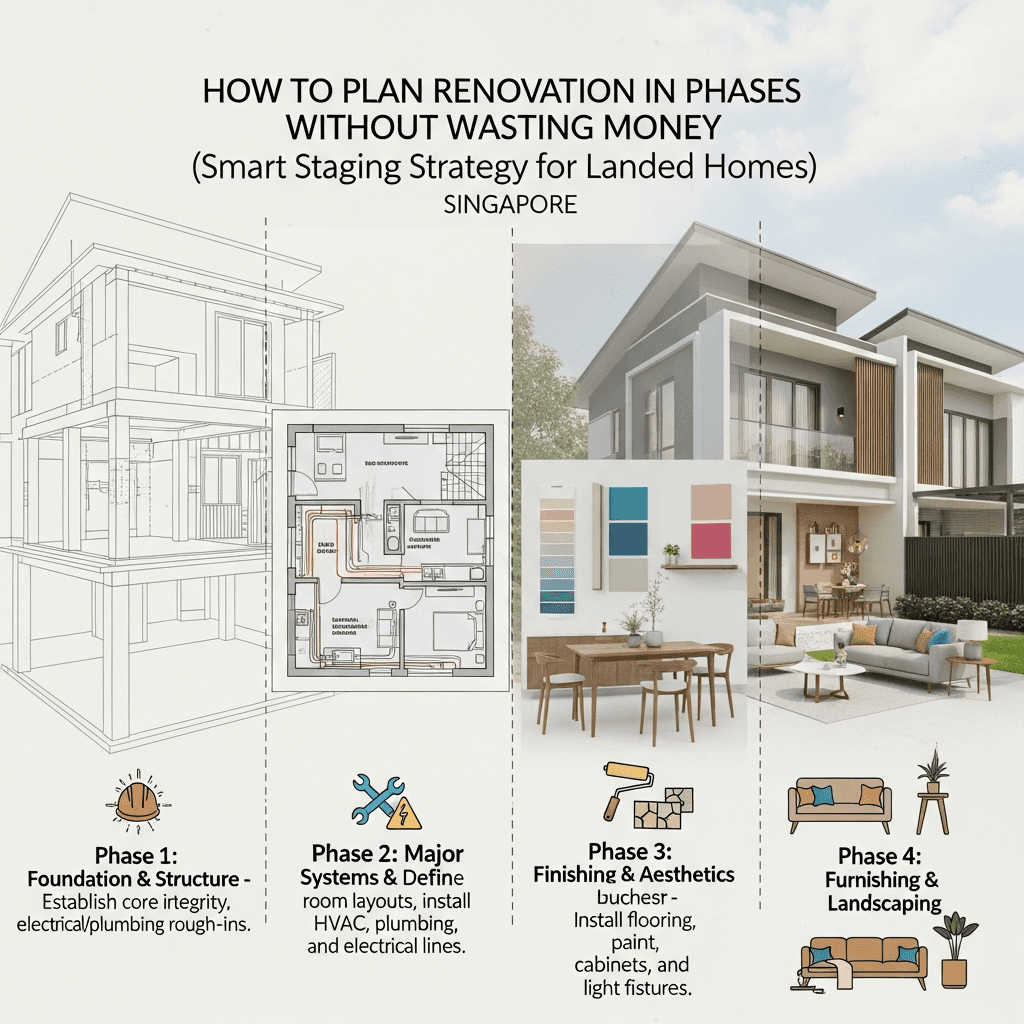
How to Plan Landed House Renovation in Phases Without Wasting Money (Singapore Guide)
Many landed homeowners in Singapore choose to renovate in phases.
Common reasons include:
Budget control after purchase
Wanting to move in first
Uncertainty about long-term needs
Avoiding full rebuild immediately
But from a landed house contractor’s perspective, staged renovation is either: extremely efficient, or extremely expensive.
The difference lies in whether the phases were planned strategically from Day 1.
Why Staged Renovation Is So Common in Singapore
Across District 19, District 15, and city-fringe landed estates:
$3M–$4M buyers often stage due to budget stretch
$4M–$6M buyers stage to control scope risk
Semi-D owners stage extensions
Terrace owners stage layout upgrades
Staging itself is not the problem. Unplanned staging is.
The 4 Types of Staged Renovation (and Which Ones Work)
1. Cosmetic First, Structural Later (High Risk)
Example:
Phase 1: interior finishes
Phase 2: structural reconfiguration
Problem:
You may hack twice
Waterproofing gets duplicated
Structural strengthening disrupts completed finishes
This is the most expensive mistake.
2. Structural First, Finishes Later (Efficient)
Example:
Phase 1: structural works, slab strengthening, extensions
Phase 2: aesthetic upgrades
This works because:
Core works are done once
Waterproofing is continuous
A&A compliance is resolved early
This is the safest approach.
3. Vertical Staging (Floor-by-Floor)
Common for semi-D and detached homes. Example:
Phase 1: ground floor
Phase 2: upper floor
This can work, but only if:
Drainage and waterproofing are unified
Structural assumptions are resolved early
4. Expansion Later (Rear or Side Extensions Deferred)
Owners move in first, then extend later. This is where regulatory surprises occur.
Before planning delayed extensions, homeowners should understand:
Singapore landed house setback requirements and extension limits
This prevents illegal or impractical expansion plans.
The Biggest Cost Traps in Staged Renovation
Trap 1, Triggering A&A in Phase 2
If Phase 1 was done as “renovation only,” but Phase 2 triggers A&A:
You may:
reopen structural work
submit new approvals
modify previous installations
Before planning phases, homeowners should review:
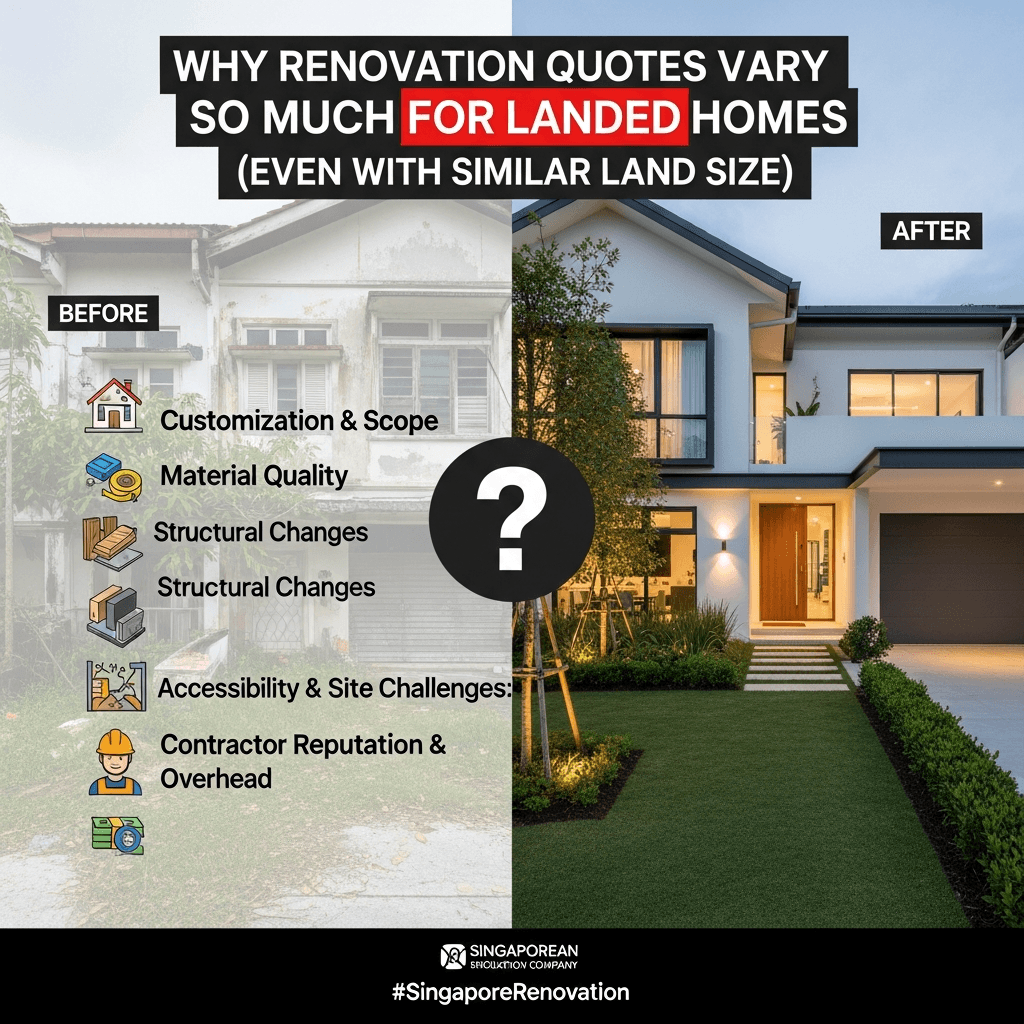
Common renovation works that trigger A&A in Singapore landed homes
Trap 2, Waterproofing Discontinuity
This is extremely common.
Example:
Roof membrane done in Phase 1
Extension modifies roof slope in Phase 2
Result:
System incompatibility
Leaks after completion
Waterproofing must be master-planned.
How to Renovate an Old Landed House Safely
Trap 3, Structural Assumptions Shift
Phase 1 may avoid touching structural walls.
But Phase 2 may require:
wall removal
slab strengthening
beam modification
This can affect:
previously installed finishes
electrical routing
plumbing layout
Before removing walls in any stage, homeowners should understand:
How to identify structural vs non-structural walls in landed houses
When Staged Renovation Makes Financial Sense
Staging works well when:
You have a clear 5–10 year plan
Structural feasibility is assessed upfront
Compliance triggers are identified early
Drainage and waterproofing are designed holistically
It does NOT work when:
Staging is reactive
Budget decisions override structural logic
Approvals are treated as “later issues”
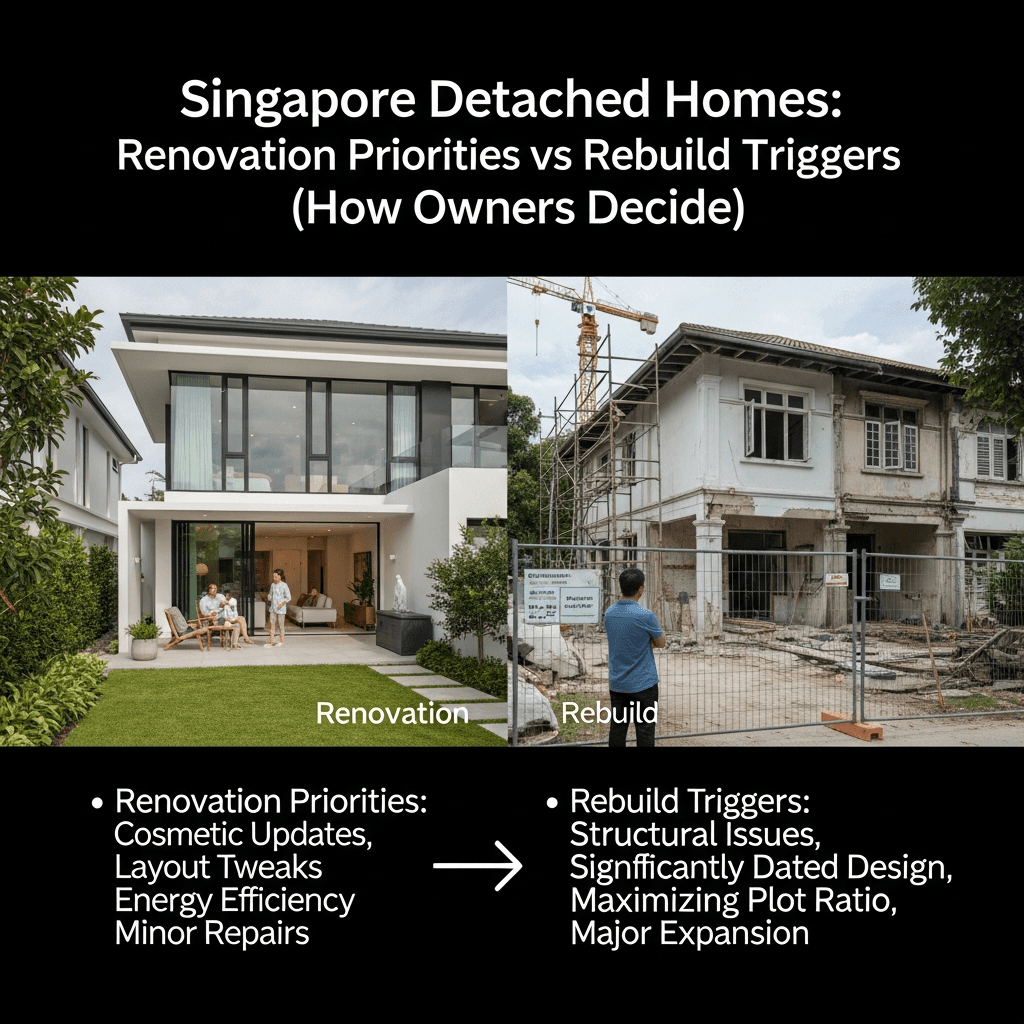
Renovation vs A&A vs Rebuild in Staging Context
Situation | Best Approach |
Minor layout upgrade | Renovation |
Planned extension later | A&A (planned early) |
Major structural inefficiency | Consider rebuild |
Multi-generation long-term plan | Evaluate rebuild seriously |
Rebuild vs A&A: Which Is Better for Your Landed Home?
Why Early Contractor Involvement Is Critical in Staging
Staged renovation requires:
Master sequencing
Structural foresight
Regulatory clarity
Drainage coordination
This is why homeowners searching
“landed house contractor Singapore”
are often in the middle of staged decision-making.
A contractor engaged early can:
Map all phases
Identify A&A triggers
Prevent duplicated works
Control long-term cost
How Ember Earther Builders Plans Staged Renovations
Ember approaches staging with:
A full masterplan before Phase 1
Structural feasibility validation
Compliance-first sequencing
Waterproofing continuity strategy
Budget modelling across phases
The goal is simple:
Build once. Avoid undoing.
If you are planning staged renovation for your landed home in Singapore and want to avoid duplicated cost or regulatory surprises, early consultation with a landed house contractor can help you sequence works intelligently from Day 1.
Ember Earther Builders supports landed homeowners across District 15, District 19, and Bukit Timah with clarity-first phased renovation planning.
Related